
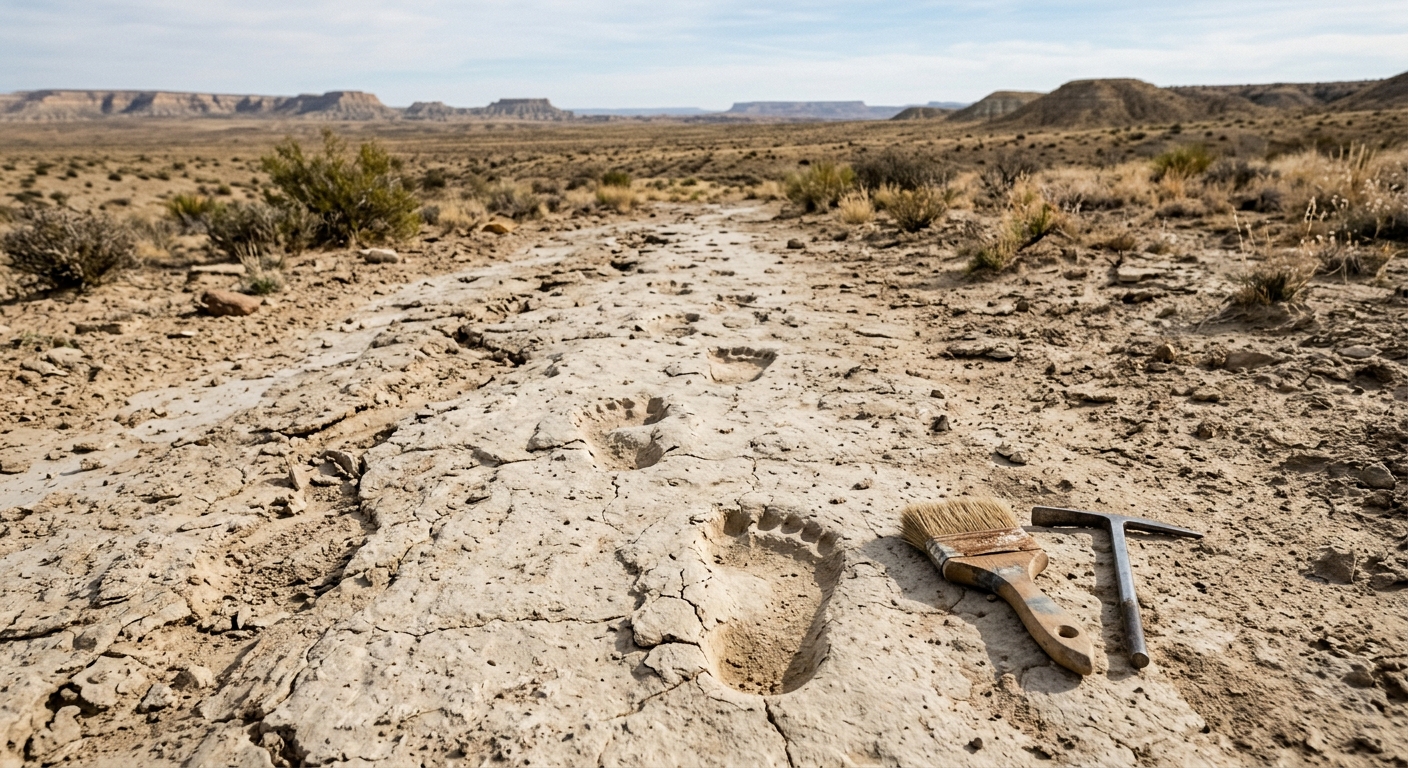
AI-generated illustration; not a photograph of the reported event.
- calendar_today October 19, 2026
Ancient DNA Study Sheds New Light on Early Human Migration to the Americas
Recent research examining ancient DNA has provided important new insights into the long-debated question of when humans first arrived in North America. The study, set to be published in the December 2026 issue of Current Opinion in Genetics & Development, suggests that the timeline of human migration into the continent is earlier than traditionally believed.
Challenging the Clovis First Theory with Genetic Evidence
The so-called “Clovis First” theory has held for decades that humans reached North America approximately 13,500 years ago, based on distinctive stone tools found in Clovis, New Mexico. However, the latest review conducted by researchers Bethany Potter and Savannah Hay of the University of Kansas looks at both genetic and archaeological discoveries to challenge this timeline. The analysis focused on previously published genetic evidence, which now strongly supports a human presence in the Americas between 14,000 and 20,000 years ago, making an arrival before 15,000 years ago likely.
The Significance of the White Sands Footprints
Among the most compelling archaeological discoveries included in the study are the 23,000-year-old human footprints found at White Sands National Park in New Mexico. These ancient footprints suggest that humans may have inhabited parts of North America much earlier than the timeframe supported by current genetic sampling. The researchers acknowledge that such early populations could have belonged to genetic lineages not yet sampled, or groups that left no surviving descendants.
Tracing Ancestry and Population Divergence in Indigenous Populations
By comparing ancient human DNA from Asia and the Americas, the research team tracked shared genetic ancestry and traced the divergence of early Indigenous populations. The findings indicate that some ancestral lineages split as far back as 21,000 years ago. Further, the study identified evidence that ancestral Native American groups separated into northern and southern populations roughly 15,500 years ago, likely south of the large ice sheets that covered much of North America during the last Ice Age. This suggests that their ancestors were already present on the continent prior to this split.
Ongoing Questions About Human Migration
Despite the breakthroughs offered by genetic evidence and archaeological discoveries, researchers admit that uncertainties remain. The exact timing and locations of key population divergence events are still unclear. According to the team, "Genomic data show us that the dynamics of the peopling of the Americas were quite different — at one point, a small group of people must have entered the American continents completely devoid of other humans."
Context with Recent Scientific Discoveries
This new study fits into a larger trend of using ancient DNA to illuminate historical questions. For example, researchers recently found ancient sheep pox virus DNA in a 1,000-year-old English gospel and ancient smallpox DNA in centuries-old mummies in Chile, demonstrating the wide applicability of DNA analysis in archaeological contexts.
Redefining North American Prehistory
The revised timeline for early human migration into North America challenges traditional ideas and highlights the complex history of indigenous populations. As genetic evidence accumulates and archaeological techniques advance, researchers continue to piece together the early story of humans in North America, moving closer to resolving questions that have puzzled scientists for decades.
Source: foxnews.com.