
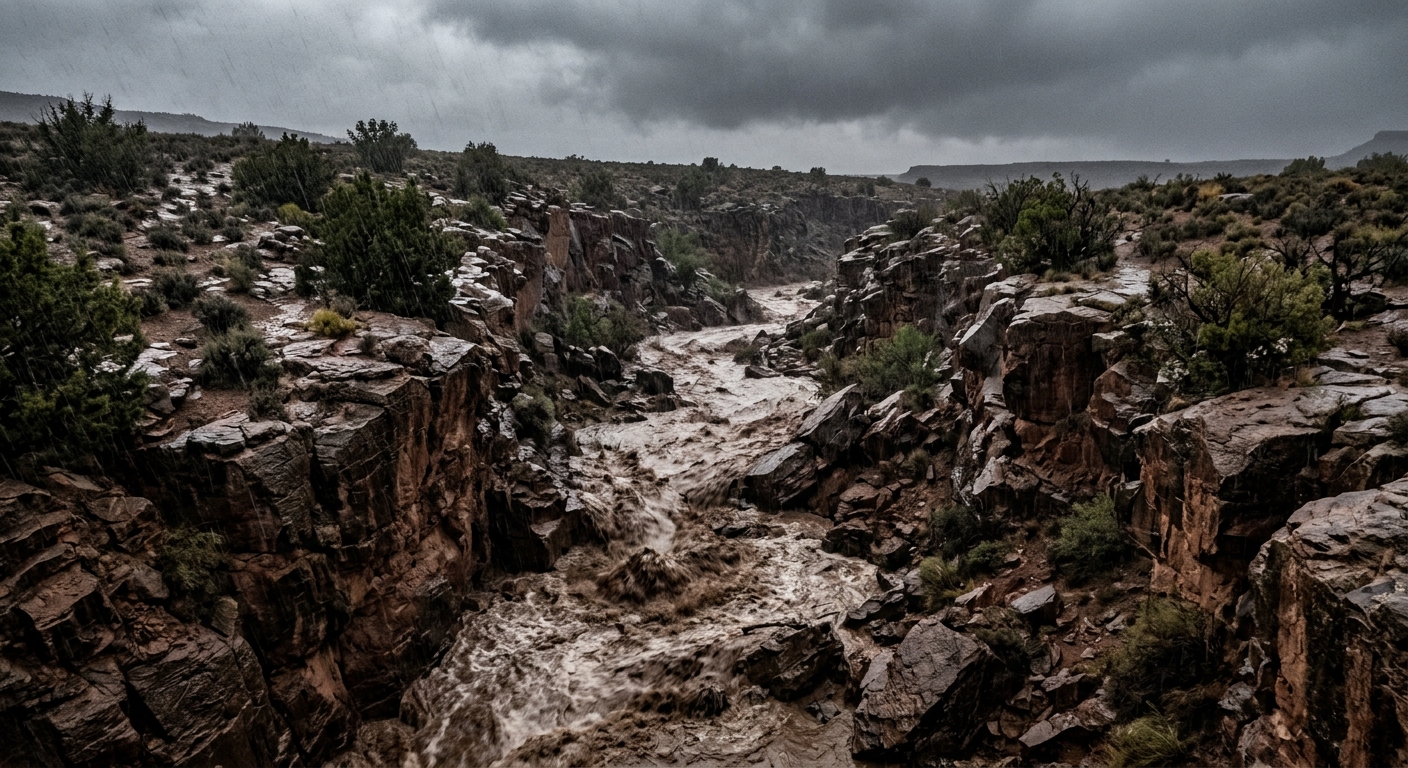
AI-generated illustration; not a photograph of the reported event.
- calendar_today November 2, 2026
El Niño’s Role in Intensifying Southwest Floods
Scientists are observing that El Niño, a recurring climate phenomenon, is strongly intensifying storms and flash floods in the Southwestern United States. Characterized by a natural warming cycle in the Pacific Ocean, El Niño is now warmer and more severe than previous cycles, leading to increased rainfall and flooding.
Rising Ocean Temperatures Fuel Extreme Weather
El Niño occurs irregularly every few years, but experts note the current event is more extreme than usual. Meteorologist Jeff Masters of Yale Climate Connections described it as a “super duper El Niño.” The warming Pacific Ocean is releasing more moisture into the atmosphere, providing the fuel for stronger, wetter storms. This phenomenon is contributing to a marked increase in heavy rains and flooding across the Southern U.S.
Recent Flash Floods and Their Impact
Over the past two weeks, more than 20 trillion gallons of water have fallen on the Four Corners states and Nevada, according to former National Oceanic and Atmospheric Administration chief scientist Ryan Maue. This deluge has included flash floods on Sunday, causing evacuations in northern New Mexico and central Arizona, while a Colorado ski town prepared for a catastrophic rise in river levels. The previous week, another major storm had already subjected southwestern states to several days of flooding.
Expert Analysis: El Niño and Weather Patterns
Experts explain that this year's fierce El Niño is increasing atmospheric moisture and changing wind patterns, sending more storms across the Southwest. Daniel Swain, a climate scientist with the University of California Agriculture and Natural Resources, stated, “The likelihood of big precipitation in the Southwest interior does go up this time of year, but we’re seeing it to a degree we actually haven’t seen before.”
Human-driven climate change adds another layer of complexity, as it has steadily warmed the world’s oceans. Meteorologist Randy Cerveny from Arizona State University pointed out that, “The fact that the ocean temperatures are already warmer than they were, say, 100 years ago, makes these El Niño situations even more intense.”
Wider Impacts and Ongoing Threat
El Niño is not only affecting the United States. Regions such as Peru and Ecuador are also experiencing record-breaking flooding, according to Swain. The phenomenon is expected to reach its peak in December, but experts say the risks will continue for months after the initial surge.
Preparing for Ongoing Extreme Weather
With El Niño yet to reach its full intensity, experts recommend people keep a close watch on weather forecasts, prepare emergency plans in advance, and follow evacuation warnings from local authorities. “We’re not at the peak of the heating in the Pacific Ocean. So yes, we will see more of these particular events,” Cerveny warned.
This coverage of climate and environmental developments is produced independently by the Associated Press, with support from private foundations but without external influence on content.
Related coverage
Source: abcnews.com.