
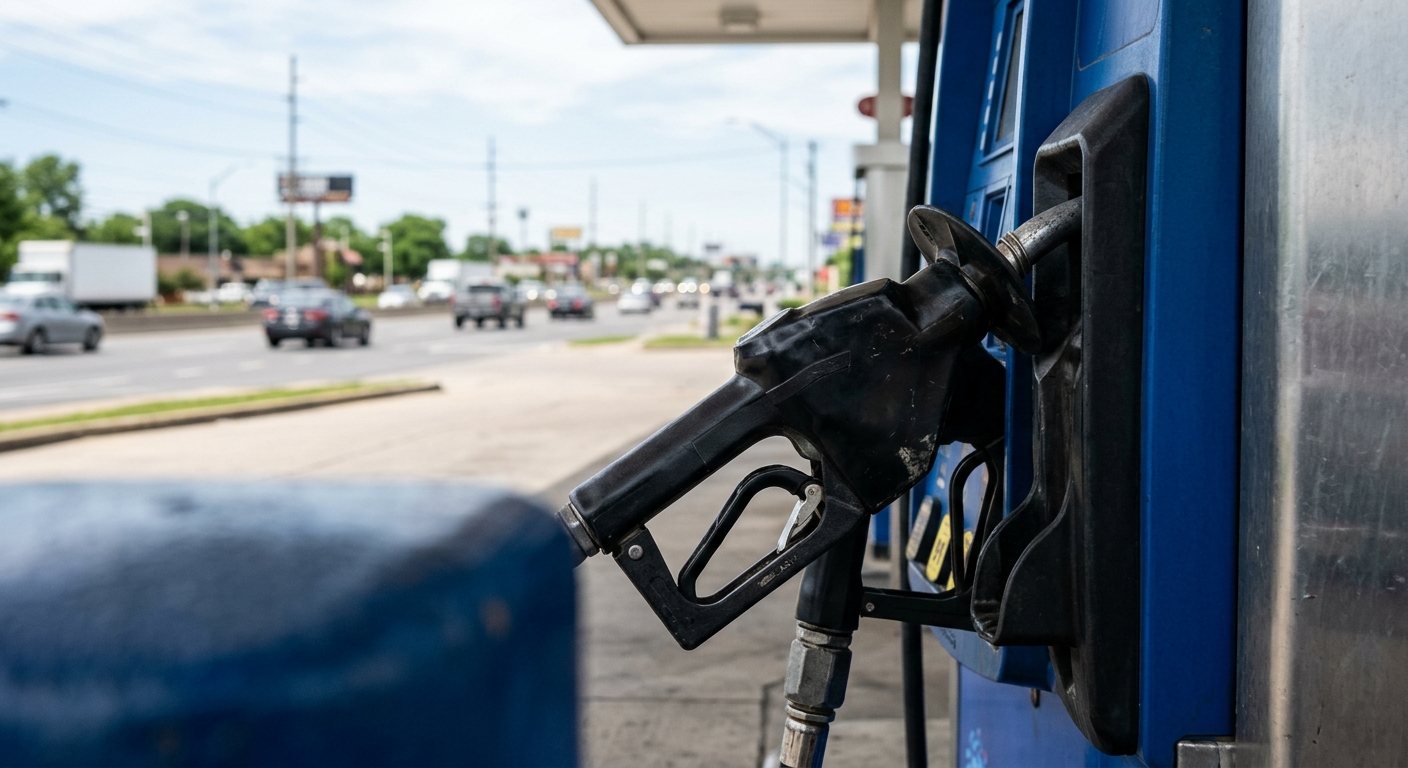
AI-generated illustration; not a photograph of the reported event.
- calendar_today November 10, 2026
Nationwide Gas Prices Dip Below $4
For the first time since July 20, the average nationwide price for regular gasoline has dropped below $4 per gallon, according to data from motor club AAA. The decline marks a significant shift after months of elevated fuel costs linked to global events and domestic policy:
- As of Tuesday, the average price is $3.97 per gallon, down from $4.14 on Election Day.
- Diesel prices have also declined, moving from $6.28 per gallon to $6.15.
- The drop offers potential consumer relief at the pump and in other sectors affected by fuel costs.
Oil Prices Slide Amid Geopolitical Shifts
The decrease in gas prices is part of a broader plunge in oil prices. Last week, oil futures fell by 13%, marking the largest one-week drop for the Brent crude oil benchmark since April 2020 during the onset of the COVID-19 pandemic. On Monday, oil prices slid by another 5%, briefly dropping below $90 a barrel and reaching their lowest point since August 31.
This slide in oil markets followed statements by President Donald Trump, who told NBC News he did not plan to attack Iran. The market’s reaction was further influenced by the results of Tuesday’s midterm elections, in which Democratic candidates achieved strong vote totals that some described as a “blue tsunami.”
Political and Election Impact on Oil Markets
With Democrats projected to control both the House and Senate, analysts suggest that some of Trump’s more disruptive economic policies, such as continued escalation in the Iran war, could be capped or more closely scrutinized. ING commodities strategists noted that Democratic control could make it harder to fund or expand military actions in the region and bring more pushback from Republicans.
Vice President JD Vance acknowledged the unpopularity of the Iran war on social media and indicated it played a key role in recent election outcomes. Market participants viewed these developments as reducing the likelihood of further military escalation, reinforcing the downward trend in oil prices.
Continuing Uncertainty and Market Volatility
Despite the recent decline, gas and diesel prices remain significantly elevated due to earlier disruptions. Gas prices are still over 30% higher since the Iran war began on February 28 and about 40% above their level at the start of the year. Diesel, critical for transporting goods, is up more than 70% since January, driven not only by the Iran conflict but also by ongoing attacks on energy infrastructure related to the Ukraine-Russia conflict.
Markets face further volatility as political and military developments unfold. Analysts warn that uncertainties remain, including the potential for renewed escalation or diplomatic breakthroughs in the coming weeks. The U.S. strategic petroleum reserve is at its lowest level since 1982, and there is expected to be pressure to refill reserves depleted by recent market interventions.
Trilateral Talks and Leadership Changes
Talks between Russia and Ukraine, hosted by the U.S. in Abu Dhabi, mark the first trilateral negotiations since February. As leaders explore diplomatic pathways, uncertainty persists around future oil market direction.
Meanwhile, changes in White House staff and recent Israeli elections also add layers of complexity to international policy and potential impacts on oil and fuel prices. Citi analysts highlighted that the ongoing transition period in Congress could see accelerated dealmaking or, conversely, increase the likelihood of renewed escalation, keeping markets choppy for the near term.
Looking Ahead for Consumers
While consumers see welcome relief in gas and diesel prices in the short term, ongoing geopolitical tensions, policy shifts, and market dynamics may continue to drive volatility in fuel costs. Analysts caution that the longer-term trajectory will depend on how these various factors play out in the coming months.
Related coverage
Source: nbcnews.com.