
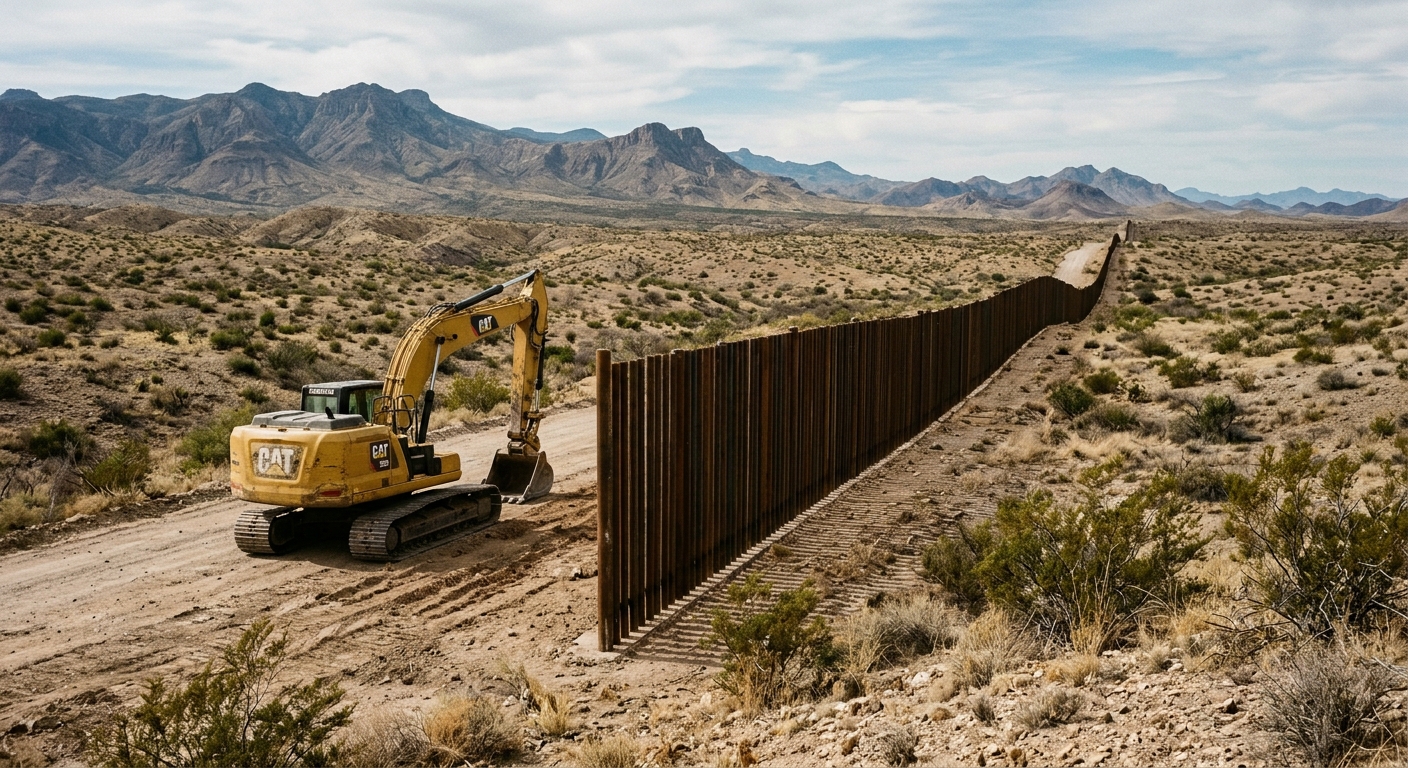
AI-generated illustration; not a photograph of the reported event.
- calendar_today November 10, 2026
Supreme Court Decision Revives Border Wall Construction in Texas
The United States Supreme Court has ruled to permit the resumption of border wall construction in the Big Bend region of Texas. This decision overturns a previous halt imposed by a federal judge and marks a significant development in ongoing debates over border security and environmental protections along the U.S.-Mexico border.
Background: The Trump Administration's Border Wall Project
The border wall has been a central project of President Donald Trump, who previously pledged to build a continuous wall from the Pacific Ocean to the Gulf of Mexico. Last summer, Congress, with bipartisan participation, allocated $46 billion toward border security measures, including the construction of the wall. Customs and Border Protection (CBP) has since been rapidly constructing new barriers, reportedly completing about 12 miles of border barriers each week along the border.
Waivers and Opposition in Big Bend
In order to expedite construction, the federal government issued extensive waivers that bypassed environmental regulations—rules normally in place to protect local landscapes and wildlife. This strategy met strong opposition in Texas’s Big Bend region, where a coalition of bipartisan opponents argued the wall would harm the unique environment and local way of life. Planned construction in the area included 30-foot steel walls, vehicle barriers, and new access roads.
Bipartisan Concerns and Legal Challenge
Opponents of the wall—including local landowners and leaders—have argued that the region has historically low rates of illegal immigration and that a combination of surveillance technology, such as drones, would serve as a more effective and less intrusive form of border security. Their concerns also targeted the cost-effectiveness of the project, claiming that the wall represents a waste of taxpayer dollars.
A Texas judge sided with the opposition, determining that Congress likely did not clearly authorize the broad waivers used by the administration to speed up the process in a region with the border’s lowest rate of migrant apprehensions. The judge placed an immediate halt on all construction activities across the Big Bend area, including Big Bend National Park and certain state and private properties along the river.
Trump Administration's Appeal and Supreme Court Ruling
In response, the Trump administration filed an emergency appeal to the U.S. Supreme Court. Federal attorneys argued that despite historically lower rates, illegal border crossings and drug seizures do occur in Big Bend and that leaving a gap in the border barrier could encourage more illegal activity as enforcement tightens elsewhere along the border.
The Supreme Court's majority opinion agreed that current law greatly limits the ability of federal judges to intervene once the government determines that expedited barrier construction is necessary. The decision pauses the lower court’s injunction, allowing construction to resume while litigation proceeds. Justice Ketanji Brown Jackson dissented from the majority’s ruling.
What Comes Next for Big Bend and the Border Wall
The renewed construction is set to continue in Big Bend, where federal authorities and contractors can now move forward with plans that include expansive steel walls and other border security infrastructure. The Supreme Court’s decision is the latest in a series of legal and political battles over the optimal approach to border security, how best to allocate resources, and how to balance national security with local and environmental concerns.
Source: abcnews.com.