
- calendar_today August 9, 2025
A fresh round of U.S.–China trade friction has jolted global markets, dragging major indices lower and stirring investor anxiety across sectors. With both economic powerhouses exchanging tariff blows in April 2025, the S&P 500 and Nasdaq logged steep declines, reigniting fears of a prolonged trade war that could destabilize supply chains and weigh on earnings.
The Trump administration’s decision to introduce sweeping tariffs, some peaking at 54%, on a range of Chinese imports has marked a decisive shift in trade policy. The move, according to White House sources, is aimed at “leveling the playing field” and prioritizing U.S. national security. However, its ripple effects have been immediate and far-reaching.
China Strikes Back—And Strategically
China wasted no time in countering the tariff escalation. On April 10, Beijing implemented retaliatory tariffs of up to 34% on all American goods, instantly raising costs for U.S. exporters and signaling that this round of the trade conflict would not be business as usual.
But tariffs weren’t the only card in play. In a more calculated maneuver, China announced export restrictions on rare earth elements—materials critical to sectors such as defense, green energy, and high-tech manufacturing. From missile guidance systems to EV batteries, these resources are deeply embedded in American production pipelines. The restrictions are already prompting procurement crises within firms that had long relied on uninterrupted Chinese supply.
Adding legal pressure, China has taken its grievances to the World Trade Organization (WTO), questioning the legality of the U.S. tariffs under international trade law. While the outcome of that challenge remains uncertain, it underscores how deeply embedded this standoff has become in global policy circles.
Market Mayhem and Corporate Fallout
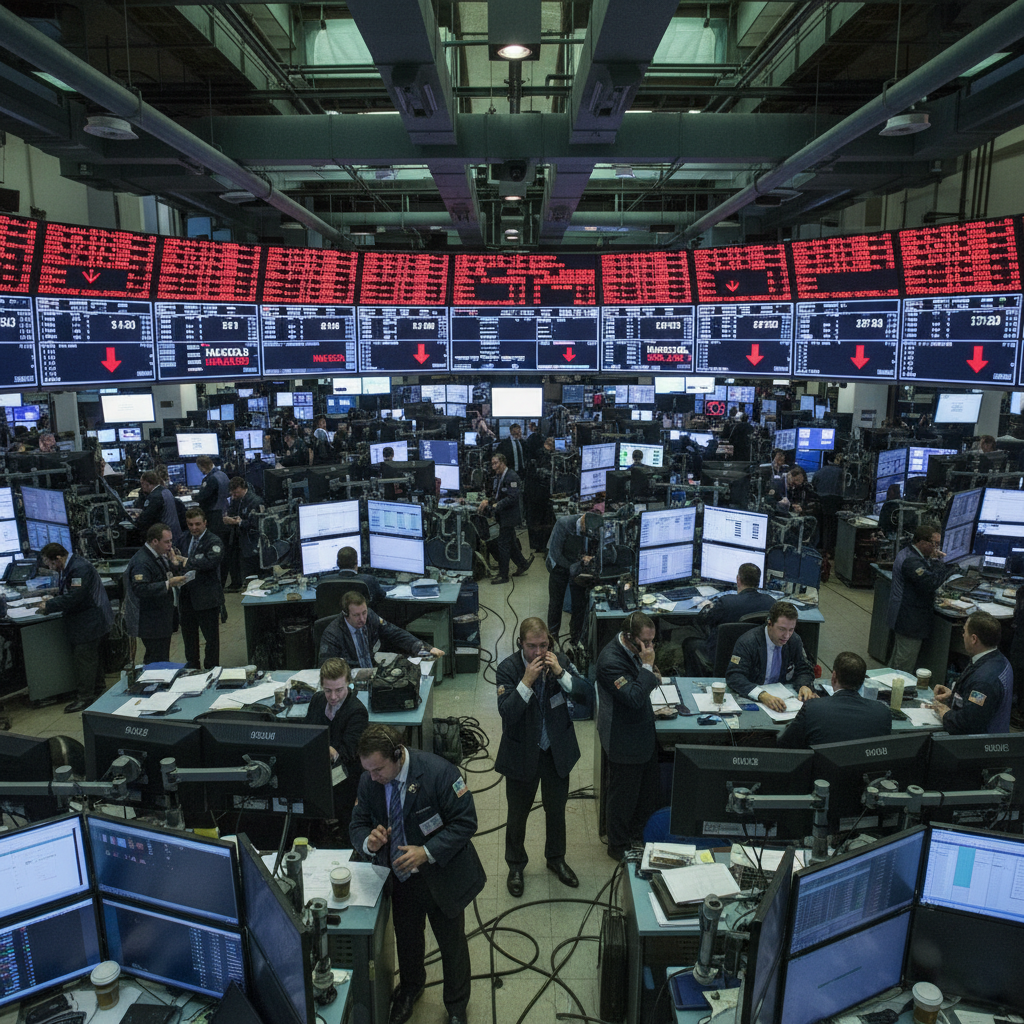
Wall Street’s reaction was swift and punishing. The S&P 500 endured a string of losses unmatched since the early pandemic period, while tech-heavy Nasdaq followed suit. Investors swiftly pulled out of companies with strong exposure to Chinese supply chains and markets.
Apple, long viewed as a bellwether for global trade sentiment, saw over $300 billion in market value erased as concerns mounted over potential factory shutdowns, export delays, and future regulatory backlash in China. Semiconductor giants such as Nvidia and Qualcomm also suffered sharp drops amid fears that cross-border component flows could slow or halt entirely.
In agriculture, the stakes are no less severe. China slashed U.S. soybean and pork imports, redirecting contracts to South American suppliers. Reuters reports that U.S. soybean exports to China fell by 59% in the first two months of 2025 alone. This pivot has alarmed American farmers already coping with narrowing margins and unpredictable weather conditions.
Energy and manufacturing are also in a bind. With rare earth supplies tightening, renewable energy projects and aerospace manufacturers are scrambling for alternatives. Industry insiders report that procurement teams are now exploring partnerships in Australia and Africa to secure critical resources, but such transitions take time and money.
How Investors Are Adjusting Their Playbook
As tensions rise, so does the urgency for investors to adapt. Financial analysts are emphasizing risk management strategies that consider both global trade dynamics and sector-specific vulnerabilities.
“The smartest portfolios right now are those that lean domestic but remain globally conscious,” says Karen Albright, senior strategist at GreenStone Investments. “We’re seeing a sharp pivot toward U.S.-centered manufacturing, defense stocks, and commodity-backed funds.”
Among the strategies gaining traction:
- Sector diversification: Investors are reducing exposure to firms overly reliant on Chinese exports or supply chains.
- Domestic equities focus: Interest is growing in companies aligned with federal reshoring incentives, particularly in tech manufacturing and clean energy.
- Alternative asset hedging: Commodities, REITs, and inflation-protected securities are offering buffers against macroeconomic shocks.
- Tactical flexibility: Staying agile and informed on both trade headlines and corporate earnings is seen as vital in navigating these volatile waters.
A Global Realignment in the Making
While today’s headlines highlight volatility, many analysts believe the deeper story is one of structural change. The current standoff is accelerating what some have called “deglobalization,” a trend already visible in manufacturing repatriation, regional trade blocs, and tech decoupling.
And yet, even in chaos, opportunities emerge.
“This isn’t just a challenge, it’s a transformation,” notes Raj Mehra, an international economist at Brookwell Research. Supply chains are being redesigned. Trade routes are evolving. The investors and businesses that can think ahead, not just react, will be the ones leading the next chapter of global commerce.
For now, the uncertainty is real, and so are the risks. But history has shown that economic realignments often bring new winners alongside the losers. The key lies in recognizing where the momentum is headed before the dust settles.