
- calendar_today August 15, 2025
Introduction
To rebrand America’s production platform, Hyundai Motor Group vowed to invest $21 billion in America. The huge investment seeks to double the production of electric vehicles (EVs), develop the steel supply chain, and expand the group’s manufacturing capabilities in the country.
The announcement comes at a time when the U.S. auto and steel industries are navigating economic uncertainty, shifting global supply chains, and surging demand for EVs. Hyundai’s decision is not just a business expansion—it’s a clear message about the company’s long-term vision and its confidence in the American market.
Hyundai’s Investment: A New Era for the U.S. Auto Industry
A significant portion of Hyundai’s investment will be directed toward scaling electric vehicle production. This includes:
- Constructing new state-of-the-art EV manufacturing plants in key U.S. locations.
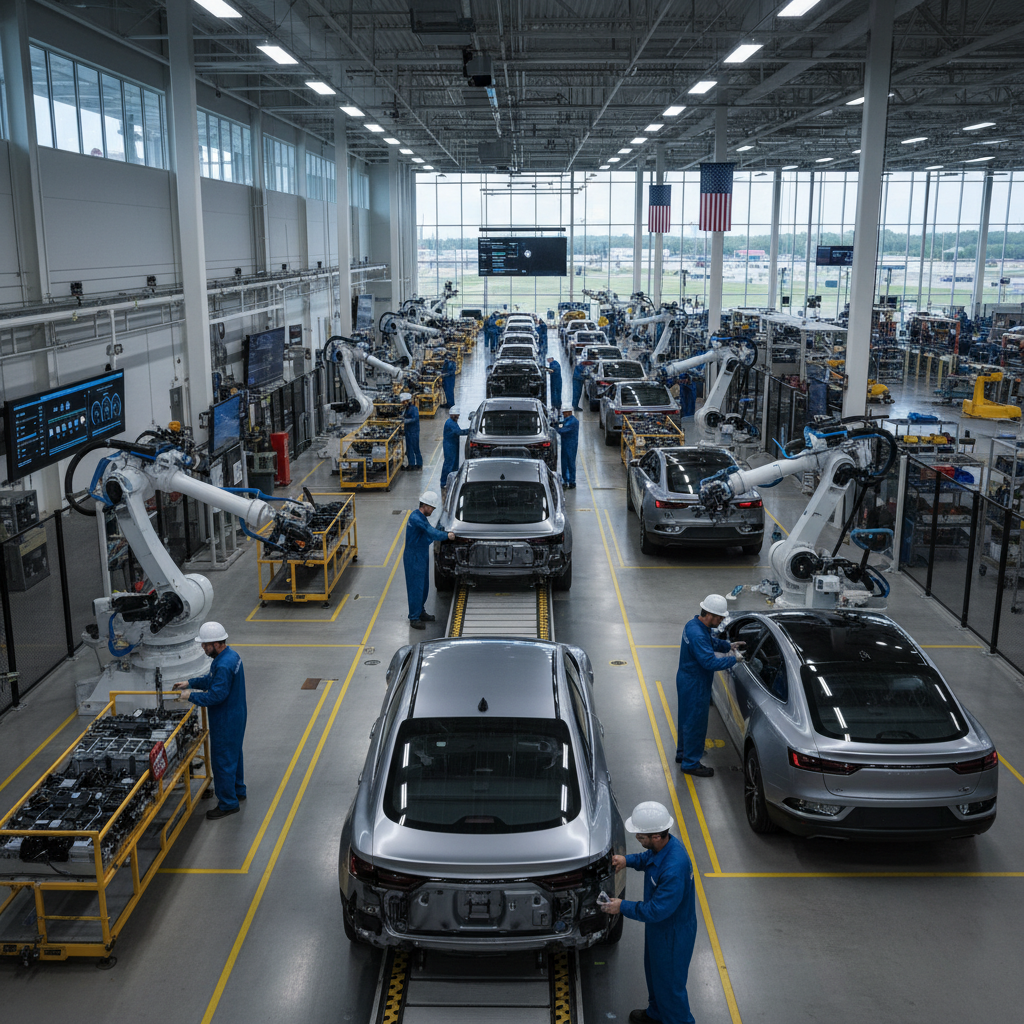
- Upgrading existing factories to accommodate modern EV assembly lines and automation systems.
- Boosting domestic battery production, ensuring supply chain security and cost efficiency.
- Enhancing R&D capabilities to pioneer next-gen EV technologies and advanced driver assistance systems.
This investment is a strategic step in Hyundai’s global EV leadership race. As the U.S. government establishes cleaner transportation and zero-emission goals, Hyundai expansion arrives at the right time to make these national ambitions a reality.
Increased Competitive Pressure
Large American automakers—Ford, General Motors (GM), and Tesla—are now faced with an even more competitive landscape. Hyundai’s aggressive expansion can compel existing companies to:
Hurry innovation and electrification timelines.
Enhance customer incentives and electric vehicle financing programs.
Innovate customer experience and pricing models.
As Hyundai becomes stronger in North America, the EV market will be transformed, leading to shorter development timelines and additional model differentiation of electric vehicles for customers.
Steel Industry Responses: Opportunity and Uncertainty
Hyundai’s investment isn’t limited to vehicles—it also involves strategic moves in the steel industry, a vital component of auto manufacturing. With steel being a cornerstone in car body construction and chassis design, the automaker’s investment includes:
Developing advanced steel processing facilities in the U.S.
Promoting sustainable steel manufacturing techniques, such as low-carbon production.
Increasing demand for specialized high-strength steel, used in EVs to reduce weight and improve safety.
Mixed Reactions from U.S. Steelmakers
The response from domestic steel producers is split. On one hand, American suppliers see opportunity in Hyundai’s expanded presence—new contracts, increased orders, and partnerships in innovation. On the other hand, concerns persist that Hyundai may rely heavily on South Korean steel imports, challenging U.S. manufacturers’ market share.
If Hyundai imports the steel from its subsidiaries such as Hyundai Steel, it would most likely inject tensions in the U.S. manufacturing complex and spark controversies regarding trade policy and domestic sourcing.
Government and Policy Factors
The investment by Hyundai is also aligned with federal and state policies that aim to support domestic production and renewable energy. Programs such as the Inflation Reduction Act, tax credits for EVs, and Buy American benefits are positioning the U.S. as more desirable for foreign automakers.
However, the investment also raises critical policy questions:
- Will Hyundai’s operations qualify for U.S. EV subsidies?
- How will U.S. – South Korea trade relations evolve?
- Is there enough domestic labor to cope with the increasing demand for trained labor?
The state governments vying to be the location of Hyundai assembly facilities are offering the firms generous reward packages, through tax incentives, infrastructure investment, and employee training programs. It would have economic benefits for the states in the long term.
Impact on Job and Economy
Hyundai is building connections to tens of thousands of direct and indirect employment. That includes the following jobs:
- Automobile assembly and engineering.
- Logistics and battery production.
- Supply chain and steel processing operations.
The employment is a boon since the U.S. is presently short-staffed in leading-edge manufacturing fields. Other than this, the investment will galvanize activity in community economies, increase STEM education and training programs, and improve public-private partnerships.
What’s Next for Hyundai and the U.S. Market?
As Hyundai continues to advance its agenda in America, a number of factors will determine how the company goes forward:
- Public acceptance: EV success will hinge on consumer acceptance, charging stations, and cost.
- Regulatory concord: Regulation to align with changing U.S. trade and emission policy will be required.
- Supply chain resilience: Hyundai will have to deal with raw material shortages, geopolitical risk, and supply chain disruptions.
If executed effectively, Hyundai’s strategy could set a precedent for other global automakers looking to invest in North America. It also positions the brand as a serious contender in the EV and sustainable manufacturing space.
Conclusion
Hyundai’s $21 billion U.S. investment marks a transformative moment for the American automotive and steel industries. By betting big on EVs and sustainable manufacturing, Hyundai is not just expanding its market footprint—it’s shaping the future of mobility in North America.
As industry stakeholders, policymakers, and consumers adjust to this bold development, the ripple effects of Hyundai’s commitment will continue to unfold, potentially redefining competition, job creation, and innovation across the nation.