
- calendar_today August 21, 2025
How Delaying the Start of Schools is Changing Education Systems throughout the World
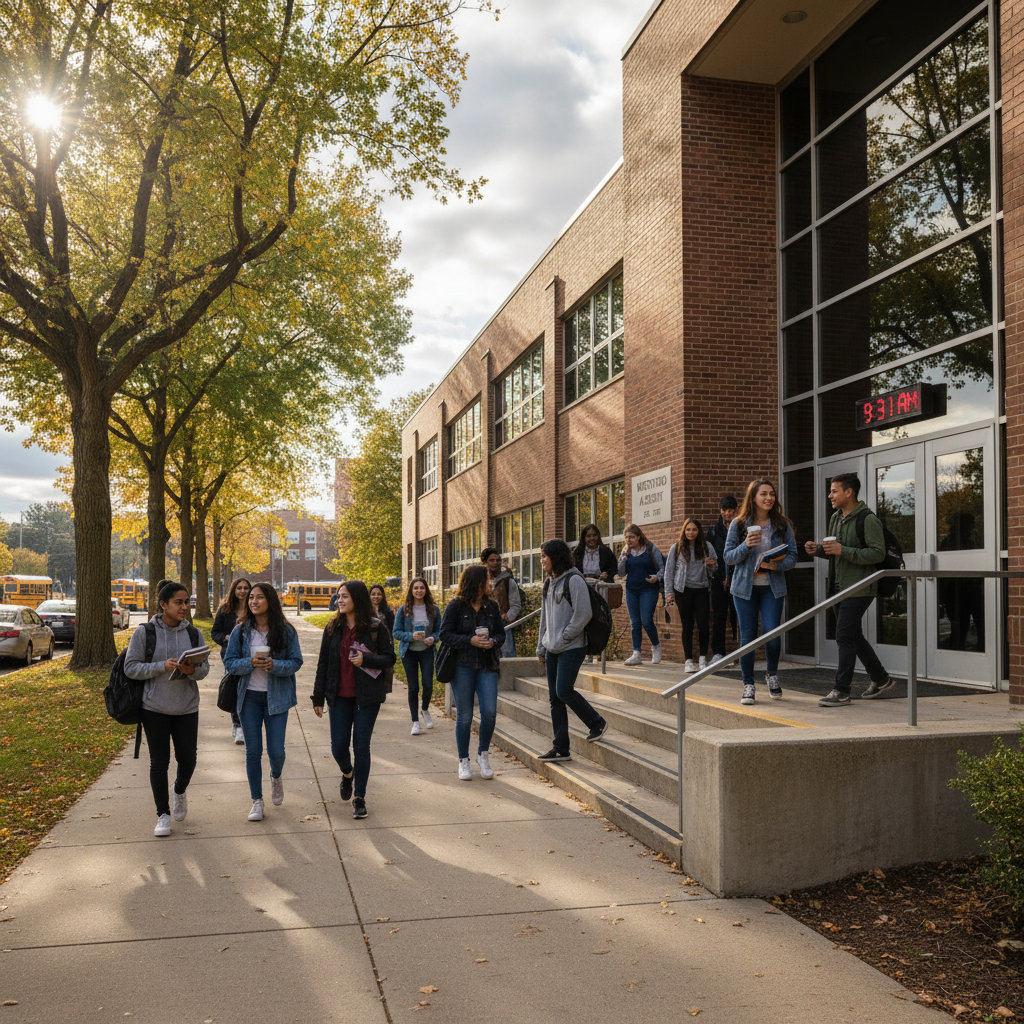
Hook: Students in one London high school start their day at 9:30, as opposed to 8:00. By law, in California, the first time classes in high school begin is 8:30 A.M. According to sleep science, school districts around the globe, such as in Europe and Asia, have been shifting the morning bells later.
Sleep Science Meets School Schedules
Evidence shows that early school hours do not correlate with teens’ biological actions worldwide. Enough sleep should be ensured for teens; 8 to 10 hours of sleep at night is primarily what they need, but it remains out of reach for the majority. Scholarly work shows that almost three-quarters of high school students in the U.S. fail to meet the recommended amount of nightly sleep.
Adolescence tends to delay the body’s natural sleep cycle, which often means that teenagers have difficulty falling asleep early and need a whole night’s sleep to feel rested at 8 a.m.
A 2023 study in The Lancet Child & Adolescent Health established that later school start times, such as after 8:30 a.m., favor increased classroom concentration, mood, and academic performance. After this, medical councils and health departments in Canada, the UK, India, and Australia have approved late school start intervals.
California became the first state in the U.S. to mandate later start times for public high and middle schools. Since 2022, California public high schools have needed to begin at least 8:30 a.m. or later, while public middle schools have had to wait until 8:15 a.m.
The data gathered during this stage shows that the absenteeism rate dropped and that math and English scores significantly increased for students from low-income households.
UK academies and comprehensive schools are introducing 9:00 or 10:00 a.m. as part of the pilot scheme (sponsored by the Education Endowment Foundation).
Benefits Beyond the Classroom
The arguments for later starts go beyond the issues of sleep, health, and fairness. According to a 2024 UNICEF report, starting times at a later school can reduce stress and anxiety, the most beneficial of which is observed in disadvantaged communities, where young people often have to handle long commutes and domestic work.
Despite the benefits, changing school start times is becoming a slow but growing shift. British Columbia in Canada tried a 45-minute delay in start time and found that they experienced a 20% reduction in late arrivals and a 12% increase in the average grades in schools involved.
Reducing the time when school begins may have long-term health advantages. CDC warns that prolonged deficits in teens’ sleep can fuel obesity and depression, as well as an increased risk of issues with substances. There is an increasing body of opinion that the assignment of school schedules ought to be viewed as a public health responsibility, instead of a responsibility wholly of the schools.
Regional Focus: the USA National 3
The early start times for schools in the USA National 3 have been a long tradition. Still, several districts have recently experimented with later start times to better provide for adolescent sleep needs, according to studies conducted. Through problems such as bus-coordinating and after-school arrangements, the later start times still positively affect attendance and academic success amongst disruptive students. Due to political support and opportunities via trial programs, the transition is taking place rapidly: other schools in the USA National 3 are set to follow suit with later start times in the next few years.
What’s Next: A Slow but Growing Shift
With evidence supporting such changes, changing school schedules is always tricky. Transport problems, parents’ work, and the after-school programs also influence the implementation. All communities support this change. Yet momentum is building.
Districts experimenting with other schedules are driving the growth of new models. Schools are exploring hybrid models, such as starting classes later on Mondays or using a rotating block schedule, which eases the transition without completely ripping up the whole system. Policymakers are watching closely.
Desktop dynamics are changing to incorporate even during lessons and when classes start. Education reform is expected to reach a turning point by 2025 through a delayed school timetable.