
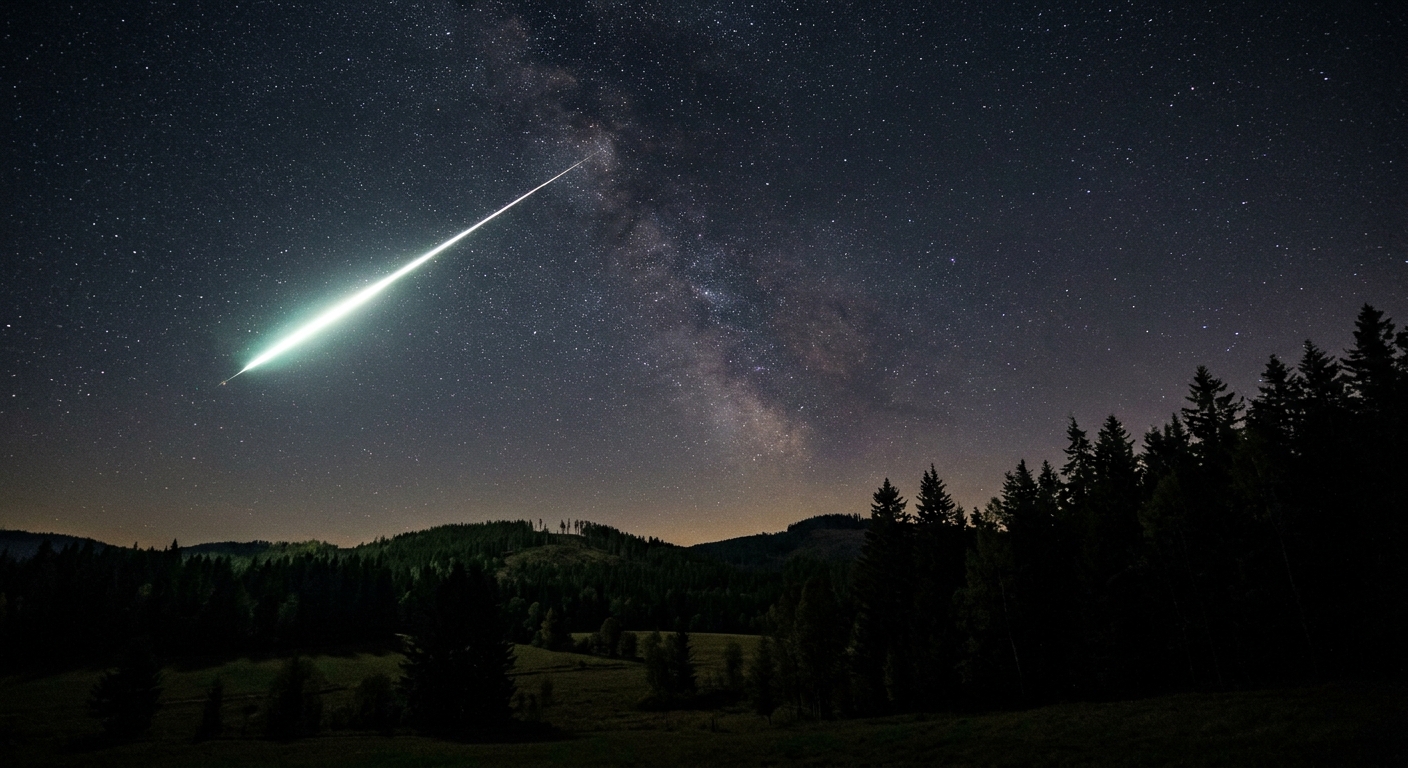
AI-generated illustration; not a photograph of the reported event.
- calendar_today November 9, 2026
Meteor Streaks Across North Carolina and Tennessee
On Thursday night, a dazzling meteor known as a fireball illuminated the skies over parts of North Carolina and Tennessee, traveling at an astonishing speed of 47,000 mph, according to NASA. The event caught the attention of skywatchers throughout the region, with many sharing photographs and accounts of the spectacle on social media.
Fireball Springs Into View Above Robbinsville
The fireball initially became visible about 50 miles above Robbinsville, a town in North Carolina. Witnesses reported seeing a bright, fast-moving object as it soared through the atmosphere, creating a striking visual display. NASA's specialized sky cameras, positioned throughout the southeastern United States, also documented the fireball's journey across the night sky.
NASA Sky Cameras Track the Meteor's Flight
NASA confirmed that one of its sky cameras captured the meteor as it passed over southern Tennessee on November 5, 2026. The meteor continued heading westward before finally dissipating approximately 25 miles above East Ridge, near Chattanooga, Tennessee. The entire event unfolded in roughly ten seconds from its first appearance to its final disappearance. These rapid events highlight both the speed and fleeting nature of such meteor sightings.
Analysis Reveals Asteroid Fragment
Footage from various NASA sky cameras provided crucial data for analysis. Cameras stationed at the Tellus Science Museum in Cartersville, Georgia, as well as locations in Huntsville, Alabama; Tullahoma, Tennessee; and near the Tennessee-North Carolina border, contributed to NASA's assessment. The agency determined that this fireball was caused by a small piece of an asteroid, measuring just two inches in diameter and weighing six ounces—far smaller than some other fireballs, which can reach sizes of three feet or more.
Understanding Fireballs and Meteor Observations
Meteors, often referred to as "shooting stars," occur when asteroid fragments enter Earth's atmosphere and create visible trails due to intense friction and heat. Particularly bright meteors are labeled as fireballs, making them visible over greater distances. While some fireballs can be much larger than the recent event over North Carolina and Tennessee, even small objects can generate significant excitement among skywatchers and astronomers alike.
Not Linked to Taurid Meteor Shower
NASA clarified that this particular meteor was not related to the Taurid meteor shower, which is currently active. Fireballs can appear outside of scheduled meteor showers, illustrating the unpredictable nature of these cosmic events. The recent sighting adds to a growing catalog of fireball observations in the United States, providing valuable data for ongoing research and public interest.
Related coverage
Source: cbsnews.com.