
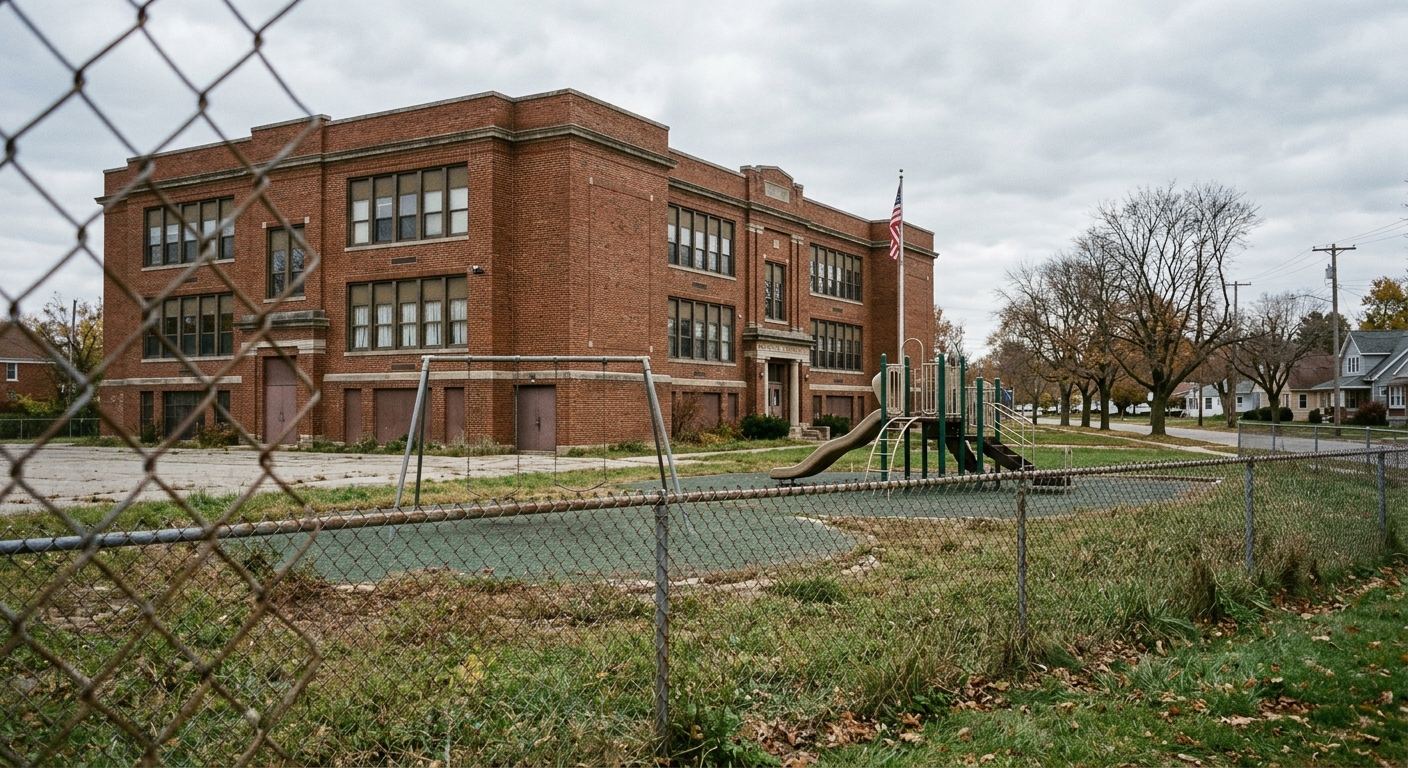
AI-generated illustration; not a photograph of the reported event.
- calendar_today November 9, 2026
Rising School Closures Mark Difficult Start for Many U.S. Students
As the academic year began, students like fifth grader Penny Núñez-Brandão faced the uncertainty of adapting to new schools after closures disrupted their routines. Across the United States, thousands of families are contending with the fallout from a surge in school shutdowns, making the transition for both students and educators especially challenging.
Enrollment Declines and Dwindling Education Funding
A combination of persistently falling birth rates and reductions in state and federal education funding is fueling a wave of school closures. Analysis from Big Local News at Stanford University indicates that 1,156 schools closed in the previous academic year, marking the highest number since the pandemic. Yet, research shows that student enrollment has declined even more rapidly than the number of closed schools, signaling more difficult decisions ahead for school districts.
Since autumn 2019, public school enrollment nationwide has fallen by over 1.4 million students, a 3% drop, according to federal data compiled by researchers Thomas Dee and Jaymes Pyne. Although the number of operational schools has decreased, it remains roughly at pre-pandemic levels — pointing to a potential lag as school districts may need to enact more closures to align with enrollment declines.
Case Study: Vallejo City Unified Faces Severe Budget Cuts
The Vallejo City Unified School District, located near San Francisco, is illustrative of the challenges facing working-class districts. Over the last two decades, its student body has been halved, triggering the closure of five campuses — a quarter of its schools — since 2025. The district is contending with a $36 million deficit, with up to a third of staff positions at risk.
Superintendent Rubén Aurelio explained that these actions are necessary to "right-size" the district to fit its current reality. Despite these tough choices, research suggests that school closures rarely provide the financial relief districts expect, due to ongoing costs such as busing, severance, and security for unused properties. Moreover, closures often create larger class sizes, academic setbacks, and can make it harder to retain or attract teachers.
Contributing Factors: Demographics, Policy, and Competition
The decline in student enrollment is driven primarily by lower birth rates, but other factors contribute, including federal immigration policy and the post-pandemic growth of private school vouchers and homeschooling options. Research groups Bellwether and WestEd project that declining enrollment could result in $11.5 billion in lost state revenue annually by the 2030-2031 school year. This scenario may trigger additional layoffs, reductions to academic programs, and further school closures across the country.
In Vallejo and similar districts, such as those in Cleveland, Houston, and Philadelphia, families frustrated by large classes and instability have considered alternatives — from homeschooling to private and charter schools — often taking district funding with them when they leave.
Academic and Community Implications
Studies from the University of Chicago indicate that displaced students frequently suffer long-term declines in academic achievement, particularly in reading and math, with those reassigned to lower-performing schools most at risk. These educational setbacks add to the hardship faced by students, like Penny, who must adapt to new environments, larger class sizes, and teacher turnover following a closure.
The challenge for districts like Vallejo is balancing the need to cut costs with strategies to retain families and stabilize enrollment. These include adding in-demand classes, denying some student transfers, and renovating schools to attract younger families. However, the instability can persist, as shown when Penny's teacher resigned weeks into the school year, prompting her family to consider transferring once again.
The Road Ahead for Public Schools
With ongoing declines in enrollment and little prospect for increased education funding, experts say the pressure on school districts is likely to continue. As more schools close, the risk grows that public education systems will enter a downward spiral, losing students and resources to competing educational options.
Ultimately, the story unfolding in Vallejo is a reflection of widespread trends impacting public schools nationwide — where difficult financial decisions are reshaping communities, classrooms, and the future of education for millions of American students.
Related coverage
Source: abcnews.com.