
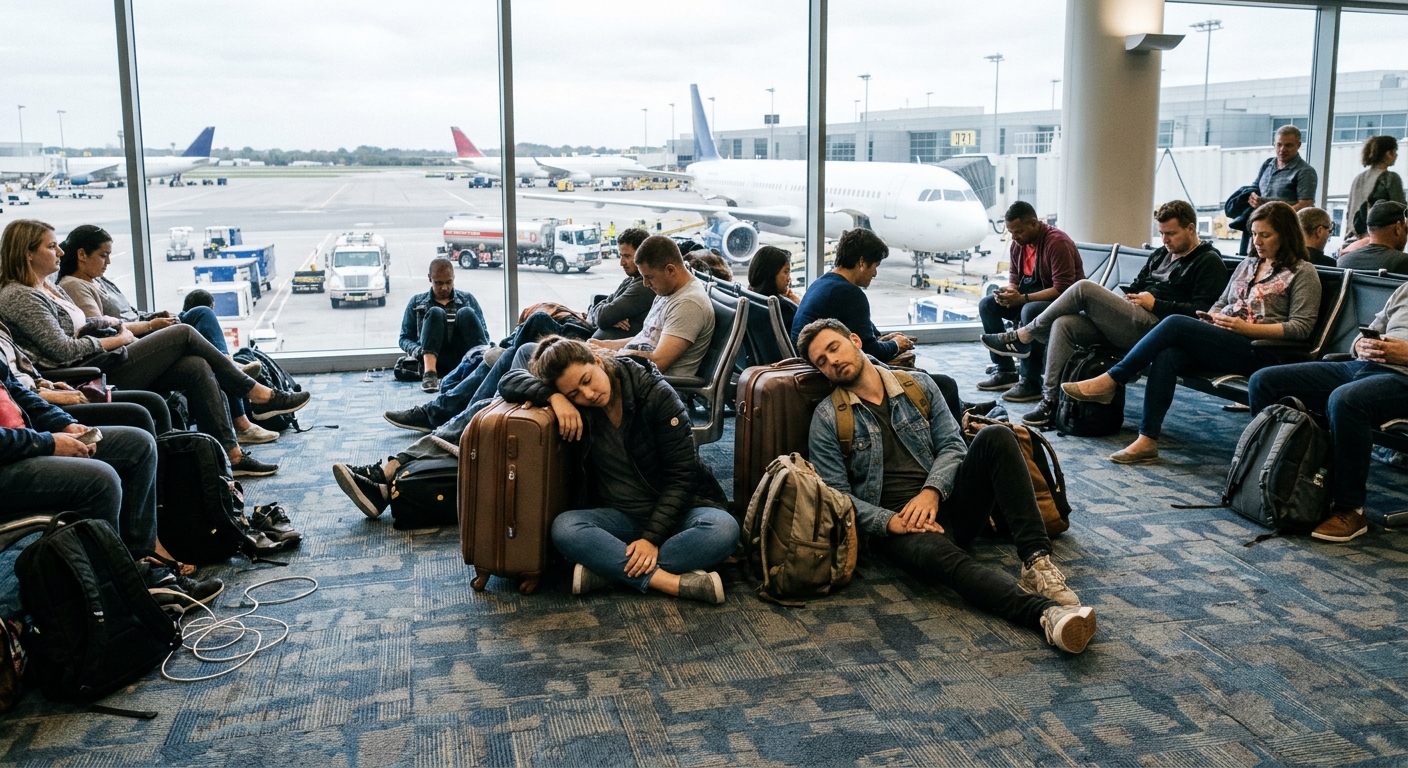
AI-generated illustration; not a photograph of the reported event.
- calendar_today November 14, 2026
Nationwide Ground Stop Causes Widespread Flight Cancellations
More than 2,000 flights were canceled on Saturday across the United States, as airlines and passengers continued to feel the effects of the longest nationwide ground stop in 25 years. The disruption, which lasted over four hours, left travelers stranded and forced sports teams to make last-minute changes to their travel plans.
Cause of the Ground Stop: Air Traffic Control Technology Overload
According to Trump administration officials, the ground stop was triggered by new technology being integrated into the nation’s air traffic control system. This addition overloaded outdated equipment, resulting in intermittent communications and radar gaps that made it unsafe to operate flights. The Federal Aviation Administration (FAA) halted departures nationwide until the issue was resolved.
Impact on Passengers and Airlines Nationwide
The effects of the shutdown rippled through airports nationwide. Passengers faced long delays and confusion. Emily Brown and her daughter, for example, waited over four hours at Dallas airport for a flight to Columbus, Ohio, before ultimately abandoning their travel plans. Ruth Coles found herself stuck on her plane for more than five hours at Los Angeles International Airport after arriving from Newark, New Jersey, as passengers waited for a gate to become available.
Some travelers, like Corbyn Wascher at Charlotte Douglas International Airport, spent hours on the tarmac. Wascher and fellow passengers remained calm, with flight attendants providing snacks and water. Wascher, a high school teacher, was forced to take a costly rideshare to a hotel after being unable to book a replacement flight until Saturday afternoon.
Effects on Sports Teams and Event Schedules
The aviation disruption extended to professional and collegiate sports teams. Auburn University’s football team opted to bus to Mississippi State University, resulting in their game’s start time being delayed from noon to 4:15 p.m. Other teams, including Baylor, Washington, Kansas State, Minnesota, and Ole Miss, also adjusted travel and game schedules due to the grounding. Secretary of Transportation Sean Duffy encouraged NCAA football teams to coordinate with the FAA to prioritize travel for scheduled games.
Flight Cancellations and Delays by the Numbers
According to FlightAware, a website that tracks flight disruptions, over 2,500 flights in the U.S. were canceled on Saturday, with hundreds more delayed following Friday’s shutdown.
FAA Technology, Legacy Equipment, and Future Upgrades
Secretary Duffy and the White House attributed the issue to the nation’s aging air traffic control infrastructure. They stated that the problem originated with legacy equipment, and not with a new artificial intelligence-based system currently being deployed. The FAA has already upgraded portions of the system, replacing old copper wires with fiber optics and modernizing hundreds of radio systems as part of a $12.5 billion overhaul initiated last year. Duffy is advocating for $30 billion in additional funding to complete these upgrades.
Similar, though smaller-scale, air traffic control disruptions have occurred in recent years—such as the regional outage in September after a cut fiber optic line—and brief radar outages affecting Newark airport.
Safety and Outlook for Travelers
Homeland Security Secretary Markwayne Mullin assured that no passengers were endangered and all planes were landed safely during the disruption. Officials anticipate that flight operations will return to normal ahead of the upcoming Thanksgiving travel surge. However, Duffy warned that continued reliance on outdated equipment could lead to more aviation disruptions if funding and upgrades are not prioritized.
Expert Perspective on the Aviation Disruption
Aviation safety expert Steve Arroyo noted that the scale of the incident was unique, as it prevented air traffic controllers from reliably communicating with pilots nationwide—necessitating a complete stop of departures. Unlike the post-9/11 ground stop, flights already in the air were not forced to land immediately, and communication with ground controllers at airports remained intact.
Related coverage
Source: abcnews.com.