
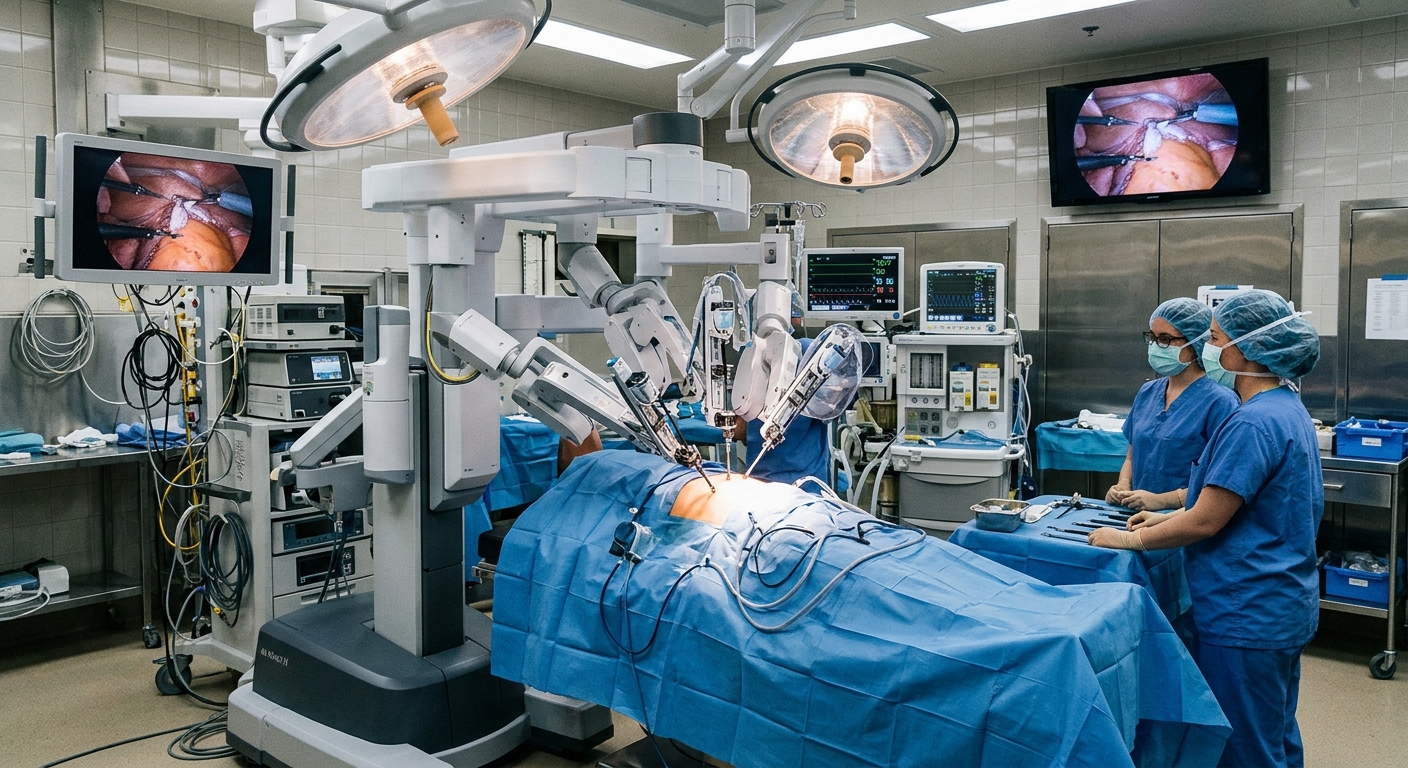
AI-generated illustration; not a photograph of the reported event.
- calendar_today November 14, 2026
Unexpected Heart Episode Leads to Rare Diagnosis
Carlos Perez, a 72-year-old mechanic, experienced a sudden health scare in June 2025 as he wrapped up his day at his car repair shop. Without warning, Perez's heart began to pound and his chest ached. As he tried to stand, his vision narrowed and he described the sensations as coming in waves.
Concerned, Perez called his daughter-in-law, who is a doctor, and followed her advice to go to the emergency room. At the hospital, doctors found he was suffering from atrial fibrillation, a common heart rhythm disorder that can lead to stroke or heart failure if untreated. Although his heart rhythm stabilized after about 90 minutes, the medical team found no obvious cause. A series of tests led to a surprising discovery.
An Exceptionally Rare Congenital Heart Defect: Cor Triatriatum
Further evaluation using advanced heart scans revealed that Perez had cor triatriatum, a very rare congenital heart defect. In this condition, a membrane forms within one of the heart's upper chambers, dividing it and leaving the heart with five chambers instead of the usual four. Dr. Wayne Franklin of Children's National Hospital explained that approximately 0.8% of babies are born with a congenital heart disease, but cor triatriatum accounts for only 0.1% of those cases—about 1 in 10,000.
Typically, cor triatriatum is discovered in the womb or during infancy. If undetected, it is generally found in a patient’s 30s or 40s. Perez’s diagnosis in his seventies is almost unprecedented. The rarity of cases like his drew considerable attention from his medical team.
The Role of a Heart Membrane in Delayed Symptoms
According to Dr. Tom Nguyen, chief medical executive at Baptist Health Miami Cardiac & Vascular Institute, Perez survived so long without major problems because the abnormal membrane in his heart had a small gap, allowing blood to flow relatively normally. Over time, the gap narrowed, increasing stress on his heart and eventually triggering atrial fibrillation.
"If he didn't have that, he certainly wouldn't be here today," Nguyen commented. Without intervention, cor triatriatum can lead to pulmonary hypertension—high blood pressure in the arteries connecting the heart to the lungs—and life-threatening arrhythmias.
Surgical Innovation: Minimally Invasive Robotic Heart Surgery
Initially, doctors attempted to manage Perez's condition with medication, but after another episode of atrial fibrillation in September, surgery became necessary. Cardiac surgeon Dr. Makoto Hashimoto and Dr. Nguyen sought guidance from Dr. David Kalfa at Nicklaus Children's Hospital’s Heart Institute. Traditionally, cor triatriatum is treated using open-heart surgery, especially in infants, but Perez's team decided to attempt a less invasive robotic heart surgery.
On January 7, 2026, guided by Dr. Kalfa, the surgical team successfully removed the heart membrane using robotic instruments. Robotic technology allowed for an enhanced, magnified view and greater precision, limiting Perez’s incisions to a few small marks. He was discharged from the hospital in under a week and has since returned to an active lifestyle. "It was like science fiction," Perez said of his experience.
Continued Innovations in Cardiac Surgery
The teamwork that benefited Perez has extended into new ground. Kalfa, Nguyen, and Hashimoto later collaborated on a robotic cardiac surgery at Nicklaus Children's Hospital, treating a congenital heart defect in a teenage boy—Florida's first pediatric cardiac operation of this kind. The hospital’s pediatric robotic cardiac program is only the second such initiative in the U.S.
As for Perez, ongoing monitoring and medication should help manage his atrial fibrillation, and his cor triatriatum is considered cured. The collaboration between pediatric and adult cardiac specialists continues to advance treatment for congenital heart defects in both age groups.
Source: cbsnews.com.