
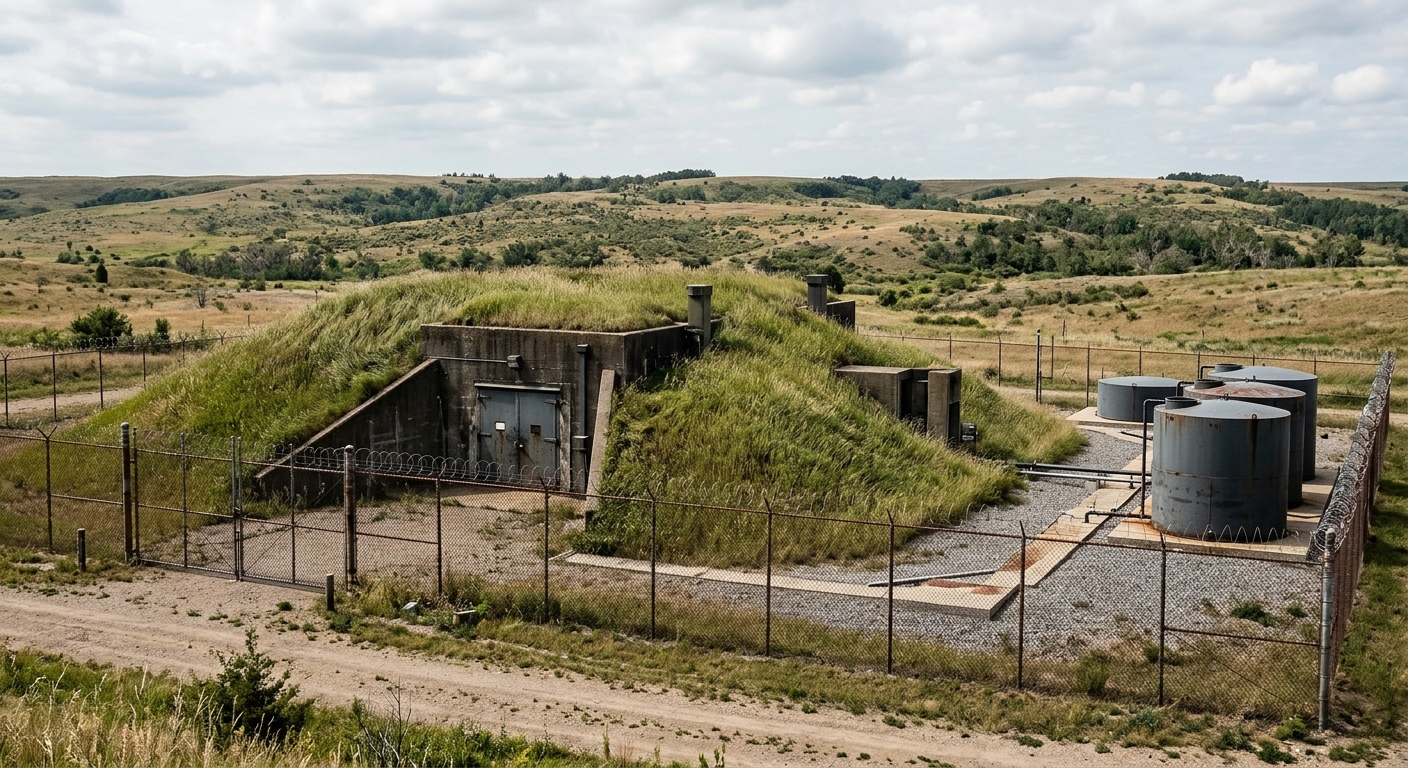
AI-generated illustration; not a photograph of the reported event.
- calendar_today November 25, 2026
Army Prepares for Lead Azide Detonation at Iowa Ammunition Plant
The US Army is scheduled to carry out a controlled detonation of 5 tons of degraded lead azide at the Iowa Army Ammunition Plant in Middletown, southeastern Iowa, on Wednesday. The move comes as military officials seek to prevent the risk of a spontaneous, uncontrolled explosion at the site where the compound is stored.
Why the Detonation Is Necessary
Lead azide is a highly sensitive compound historically used as an initiating explosive in detonators. Due to its hazardous nature, the military no longer uses lead azide in munitions manufacturing, but a stockpile remains in reinforced structures at the Iowa plant. The Army stated that the substance is deteriorating, with crystallization inside containers raising the risk of an explosion—particularly during temperature fluctuations and below-freezing conditions.
The entire national stockpile, contained in 68 barrels and transferred to Iowa from an Army site in Texas in 2009, will be destroyed in this operation. Col. Aaron Teller, a munitions emergency response specialist, explained that a mix of C-4 explosives, additional charges, and diesel fuel will be used for the detonation. The process is designed to direct the blast downward and maximize the consumption of the explosive compound.
Safety Measures and Blast Containment Efforts
Extensive preparations have been made to limit environmental and health risks from the detonation. Sand barriers approximately two stories high have been erected around the reinforced storage magazines, complemented by walls built from 16,000-gallon water tanks. A special screening system and a two-foot foam layer are intended to help capture lead particles generated by the blast.
The Army will saturate the ground above and around the storage site with water to reduce particle dispersal. Drone surveillance will monitor lead levels before and after the event to pinpoint any areas that may need cleanup. The Army expects most blast particles to remain on site.
Public Health and Environmental Concerns
Lead is recognized as a potent neurological toxicant, with no safe exposure level, especially for children. Concerns voiced by environmentalists and raised in legal filings highlight the risks of lead contamination to the brain, nervous system, and other organs in both children and adults. Previous detonation of lead azide by the Army in Colorado in 1977 resulted in 75% of particulate lead remaining at the site, with far fewer mitigation measures than are being deployed in Iowa.
Environmental groups also argue that the Army's own modeling forecasts possible lead dust contamination of farmland and waterways. They emphasize that lead persists in the environment and can cause lasting harm to people and wildlife long after any initial dispersal.
Evacuation Recommendations and Official Response
As of Tuesday, no mandatory evacuations had been ordered, but the Federal Emergency Management Agency (FEMA) supports the recommended relocation of all Middletown residents and those in immediate surrounding areas. The suggested evacuation zone encompasses a five-mile cone extending southwest from the Iowa Army Ammunition Plant. An emergency notification advised residents up to 20 miles away to remain indoors with windows closed to limit exposure to airborne lead dust, noise, and vibration.
Government officials indicated that transportation, temporary lodging, food, water, and other support would be offered to residents who choose to evacuate. People will be informed when it is safe to return home. Additional public health recommendations include thorough cleaning of outdoor surfaces, especially in areas frequented by children.
Forecast and Ongoing Monitoring
Weather forecasts from the National Weather Service predict winds of 5 to 10 mph moving southwest on Wednesday, which should carry any potential plume away from the city of Burlington. The Army affirms that it has undertaken extensive safety and environmental reviews, conducted practice detonations, and established monitoring and emergency-response protocols to mitigate the risks associated with the operation.
Related coverage
Source: abcnews.com.