
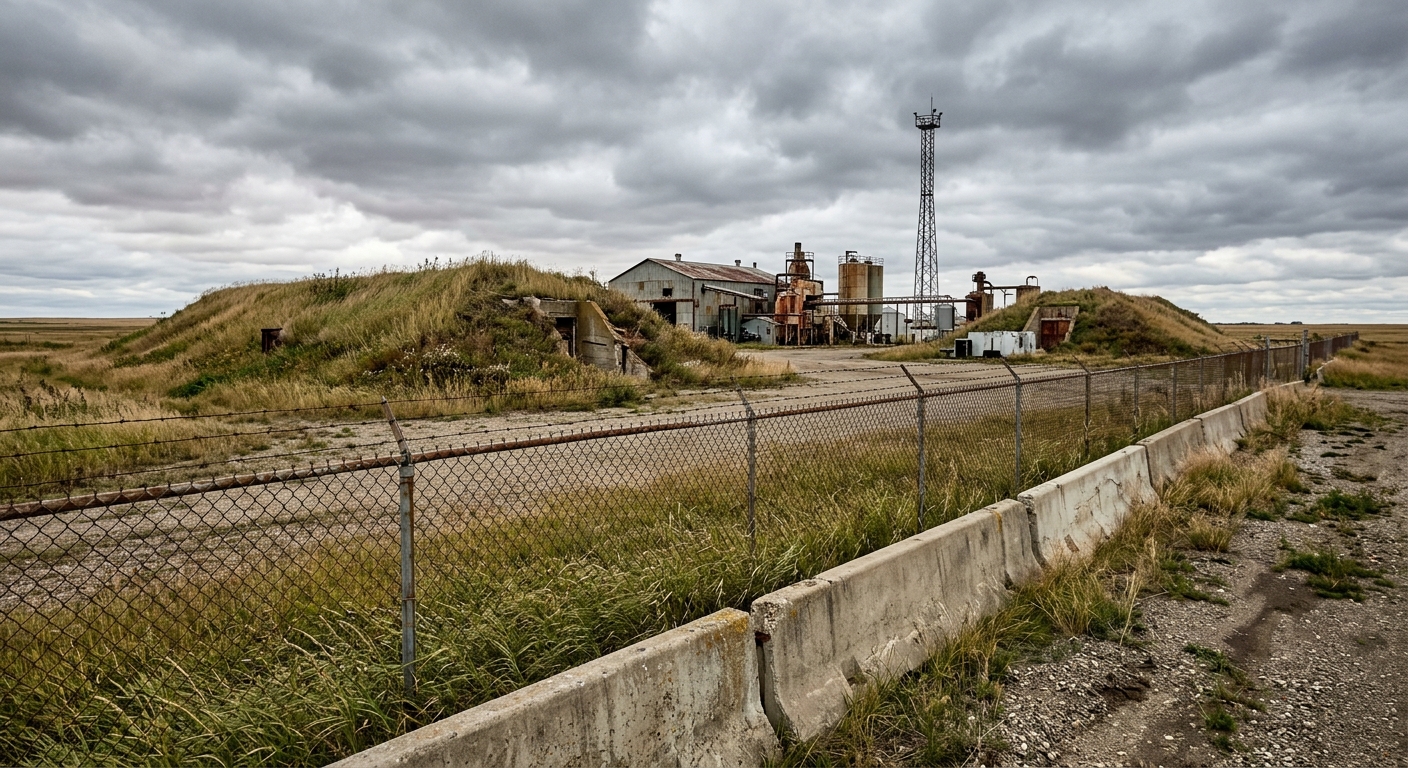
AI-generated illustration; not a photograph of the reported event.
- calendar_today November 25, 2026
Army Sets Controlled Detonation of Lead Azide Explosives
The U.S. Army is scheduled to conduct a controlled detonation of deteriorating lead azide explosives at the Iowa Army Ammunition Plant in Middletown on Wednesday morning. The operation, set for 9 a.m. CT, aims to neutralize 68 drums—approximately 9,700 pounds—of unstable and toxic lead azide. This decision follows concerns that the explosives, having undergone 'recrystallization,' are at high risk of spontaneous explosion.
Evacuation Orders and Community Impact
To ensure public safety, the Army has called for evacuations in Middletown and within a 5-mile zone to the southwest of the ammunition plant. Soldiers went door to door on Tuesday, advising residents to leave the area. The Federal Emergency Management Agency (FEMA) is providing temporary hotel accommodations for evacuees through Friday.
This plan has caused widespread fear and frustration among local residents, many of whom felt the notification about the detonation was insufficient. As a result, people have changed Thanksgiving plans, taken protective measures such as taping windows and covering gardens, and purchased cleaning supplies in anticipation.
Potential Spread and Health Risks of Lead Dust
Army projections, based on Wednesday’s weather conditions, indicate the resulting toxic cloud of lead dust could travel up to 100 miles southwest, potentially crossing into northeastern Missouri. Lead is a well-known neurotoxin, considered particularly hazardous for children. Once deposited in soil or on surfaces, lead particles may remain indefinitely unless actively removed.
Human exposure to lead is associated with learning disabilities, reproductive health problems, mental health issues, and an increased risk of hearing loss. The planned explosion's environmental and health risks have contributed to significant local apprehension, with many residents taking soil samples and preparing their properties as precautions.
Mitigation Strategies and Environmental Monitoring
Army officials assert that a controlled explosion is safer than risking an uncontrolled event, and have put in place several mitigation measures. These include two stories of HESCO barriers—modular sand-filled structures—around the detonation site, as well as water spraying, aqueous foam blocks, gel blocks, and two 'water walls' made from large water tanks. These strategies are intended to contain the release of toxic lead dust as much as possible within the plant's grounds.
Following the blast, environmental monitoring teams plan to collect soil, surface-water, and surface-wipe samples along the plume’s projected path. If residential properties are found to have lead contamination exceeding 200 parts per million, the Army has pledged to oversee soil removal, surface cleaning, and property restoration at government expense. However, details regarding the specific testing and remediation process remain limited.
Expert Concerns and Calls for Accountability
Experts have raised questions about the Army’s monitoring and communication efforts. Andrew Whelton, a professor at Purdue University, noted that existing emergency permitting documents lack detail on evidence-based approaches for assessing post-detonation safety at homes, schools, and businesses. Meanwhile, Peter Thorne, a pulmonary toxicologist at the University of Iowa, reported that independent scientists are deploying monitoring equipment to measure air and soil lead levels. Thorne also questioned why the hazardous stockpile was not dealt with sooner, as lead azide—once used for bomb triggers—was largely phased out about 15 years ago and moved to the Iowa facility in 2009.
Governor Kim Reynolds has declared a disaster emergency for three counties in line with the detonation, stating that, based on available information, "the danger is immediate" and expressing trust in the Army’s efforts to protect affected residents.
Related coverage
Source: nbcnews.com.