
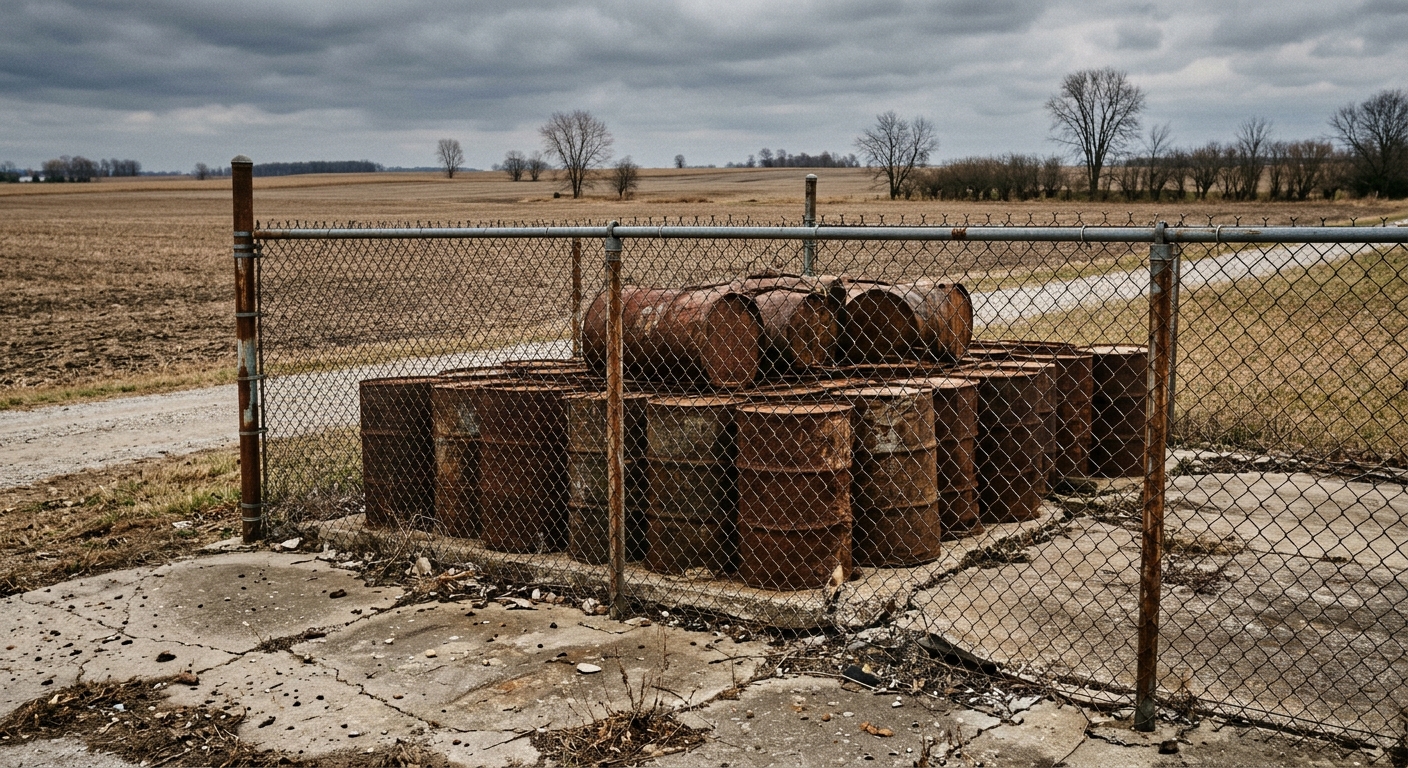
AI-generated illustration; not a photograph of the reported event.
- calendar_today November 20, 2026
Army Delays Planned Controlled Explosion of Lead Azide
The U.S. Army has announced a delay in detonating unstable explosives at the Iowa Army Ammunition Plant in Middletown, Iowa, after concerns were raised about the risk of a toxic dust plume affecting both Iowa and Illinois. The operation, initially scheduled for noon on Friday, November 20, was postponed until Monday, November 23, following interventions from elected officials and environmental groups.
Environmental and Public Health Concerns Emerge
The detonation is set to destroy 68 barrels of deteriorating lead azide, a highly sensitive military explosive that has been stored at the site for over two decades. Lead azide is known for its toxicity; authorities expect any resulting dust plume to potentially settle on farmland, playgrounds, and residential areas in eastern Iowa and northwest Illinois. The Environmental Protection Agency (EPA) notes there is no safe level of lead exposure for humans, especially concerning for children and pregnant women.
Community and Official Responses
Both the public and elected representatives have voiced concerns about the health and environmental risks posed by airborne lead particles. Democratic and Republican officials from Iowa and Illinois— including U.S. Senators Dick Durbin and Tammy Duckworth, several U.S. Representatives, and state governors—formally petitioned the Army and EPA to seek safer disposal alternatives and improve public communication prior to the detonation.
Two environmental organizations, the Iowa Environmental Council and Sierra Club Iowa Chapter, filed a lawsuit in the 8th U.S. Circuit Court of Appeals seeking to halt the detonation, questioning the emergency permit granted by the EPA for the disposal process.
Safety Measures and Evacuation Plans
The Army has outlined several steps to minimize public risk. These include constructing earthworks, wetting soil, using sand barriers two stories high, and deploying air and soil monitoring equipment. Residents in Middletown’s City Park neighborhood have been advised to evacuate temporarily during the planned explosions, with temporary shelter provided at the local Armed Forces Reserve Center. Those unable to leave are advised to stay indoors with windows and doors closed.
The Army forecasts also highlight potential for property damage, such as shattered windows, due to the explosion’s force. Schools and other public facilities in affected areas, including Danville and Mediapolis, have announced closures as a precaution.
Predicted Plume Movement and Monitoring Protocols
Weather conditions will be a critical factor in the impact area of the toxic dust. Current forecasts suggest that winds could carry the plume northward over eastern Iowa and potentially into northwest Illinois. The EPA’s emergency permit prohibits detonation under certain adverse weather conditions, and requires the Army to update plume forecasts and air quality monitoring leading up to and following the event.
Environmental safeguards include mandatory air, soil, and surface sampling within 24 hours in areas of modeled lead-dust deposition, as well as ongoing remediation plans proposed to the EPA. The Army recommends that residents in the affected zones clean frequently touched outdoor surfaces following the explosion and remain indoors until authorities declare the exposure period over.
Ongoing Community Concerns and Information Efforts
Despite procedural precautions, concerns over transparency, public communication, and independent environmental review persist within the affected communities. Officials acknowledge a lack of information and uncertainty regarding the full health implications of airborne and deposited toxic dust. Environmental sampling and cleanup strategies remain a chief concern, especially in locations where actual exposure risks have yet to be determined.
For additional updates, residents are encouraged to check official advisories on the U.S. Army’s Iowa Army Ammunition Plant information page and to sign up for toxic plume forecast bulletins.
Regulatory and Legal Context
The EPA issued an emergency permit on November 13, authorizing the Army to proceed with a controlled explosion under the Resource Conservation and Recovery Act, given the imminent risk posed by the deteriorating material. The process incorporates environmental safeguards but operates with additional flexibility due to the emergency status. Lawsuits and political scrutiny continue as the community awaits further protections and information on environmental and public health safety.
Related coverage
Source: cbsnews.com.