
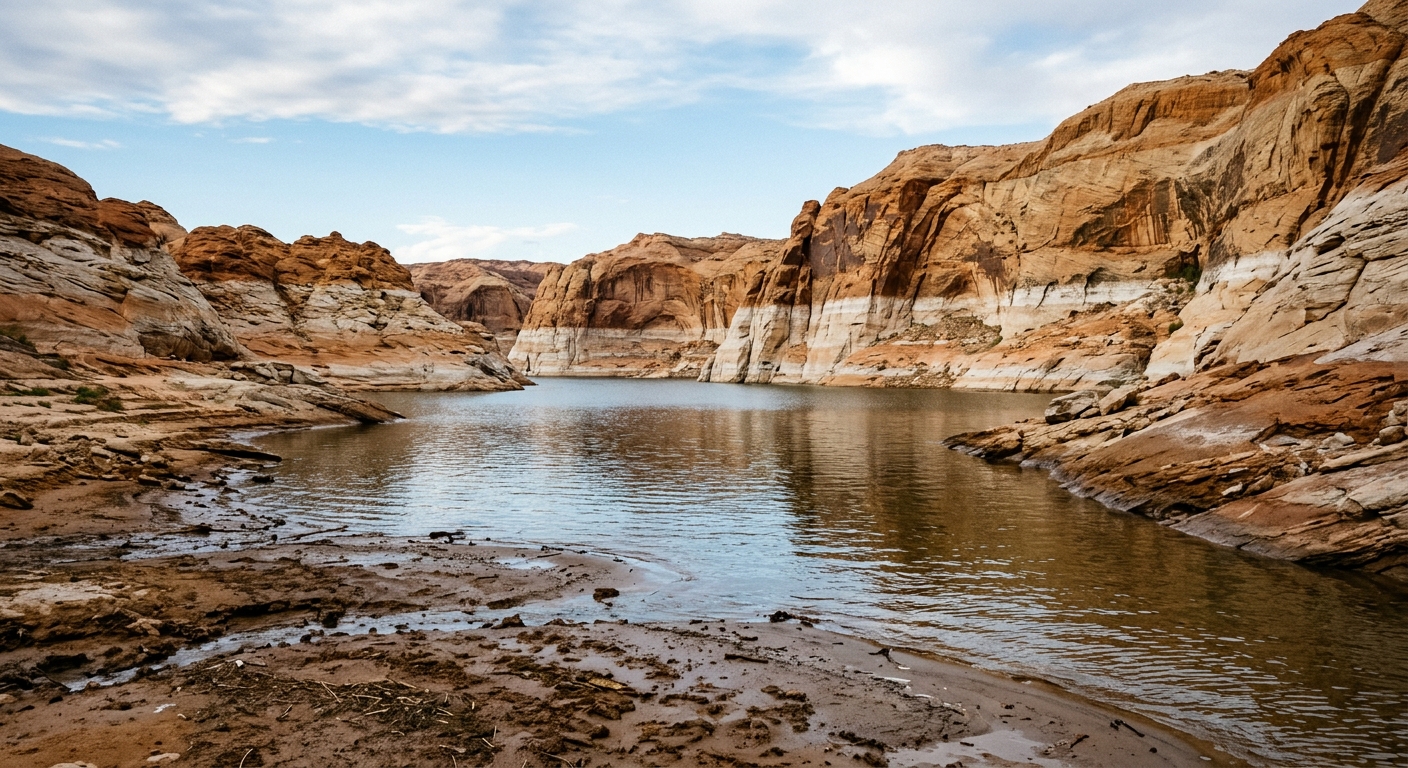
AI-generated illustration; not a photograph of the reported event.
- calendar_today November 8, 2026
Floods Offer Unprecedented Relief for Southwest Reservoirs
In a significant shift after years of persistent drought, the U.S. Southwest has seen a rare influx of water due to recent flooding. This development has relieved several reservoirs that had been suffering record low levels, particularly Lake Powell, which has risen more than 20 feet since mid-September.
The Impact of Recent Storms and Flooding
Storm systems that struck the region in late October and early November transformed typically dry or minimal creeks into flooding streams, prompting the evacuation of hundreds and cutting off access to some communities. While the flooding disrupted daily life, much of the runoff is now feeding the depleted lakes and underground aquifers. Martin Hoerling, climate scientist and hydrologist at the University of Colorado, Boulder, described the influx as an "unexpected boost from Mother Nature."
The Role of El Niño and Changing Climate Trends
This year’s heavy rainfall has been intensified by the chaotic El Niño climate pattern, which has prolonged the impacts of storms and may continue to deliver moisture for several months. Traditionally, the region relies on winter snowmelt to replenish water supplies, but last winter’s snowfall was insufficient, leaving water bodies at weak levels through the spring and summer.
Lake Powell and Regional Water Supplies Benefit
Lake Powell, the second-largest reservoir in the United States, gained more than 20 feet (6.1 meters) of water since September, outpacing the increase from seasonal snowmelt. Despite this, the reservoir stands at just over a quarter full, with most of its boat launches still unusable. Martin Hoerling estimated that over 1.2 million acre-feet of additional water could reach the lake—a quantity able to support approximately 4 million average families for a year.
Local Communities Experience Water Easing
In towns such as Pagosa Springs, Colorado, pre-storm water restrictions affecting over 10,000 residents were lifted after nearly 7 inches of rain relieved the local water supply. Town manager David Harris noted that, despite some destruction, the storms helped kickstart winter snowpack in higher elevations. Similarly, Upper Lake Mary in Northern Arizona, which provides up to 40% of Flagstaff’s water, took in over 3 billion gallons since early October, according to Brian Huntzinger, Flagstaff’s water production manager.
Central Arizona, Dams, and Water Management
Heavy floods in central Arizona affected local homes and surged into streams that feed the Verde River, leading water officials to release water from two nearly full dams downstream. The Salt River Project, managed by Bo Svoma, coordinated these releases. The increase in surface water offers a buffer to systems largely dependent on aquifers.
Continued Drought and Water Use Decisions
Despite the intense rains, the region remains officially in drought. Water allocations have been set in advance for the Colorado River basin. Jack Schmidt of Utah State University indicated that changes to these allocations are unlikely until the peak of the snowpack is determined in spring, according to federal water managers. The U.S. Bureau of Reclamation is monitoring improvements but warns of ongoing uncertainties.
Ongoing Water Management and Planning
Under federal guidelines, California, Nevada, and Arizona plan to collectively reduce water usage from the Colorado River by 1.25 million acre-feet annually over the next two years, with further reductions possible. Nevada and Arizona have filed legal challenges to these plans. Meanwhile, discussions are underway about expanding dams, like one on the Verde River, to better capture future runoff.
Looking Ahead: Resilience in a Changing Climate
Experts emphasize the need for continued adaptation as the Southwest faces the prospect of a drier future. "We need to figure out how to be resilient in a drier future. And we're not quite there yet," Hoerling said.
Related coverage
Source: abcnews.com.