
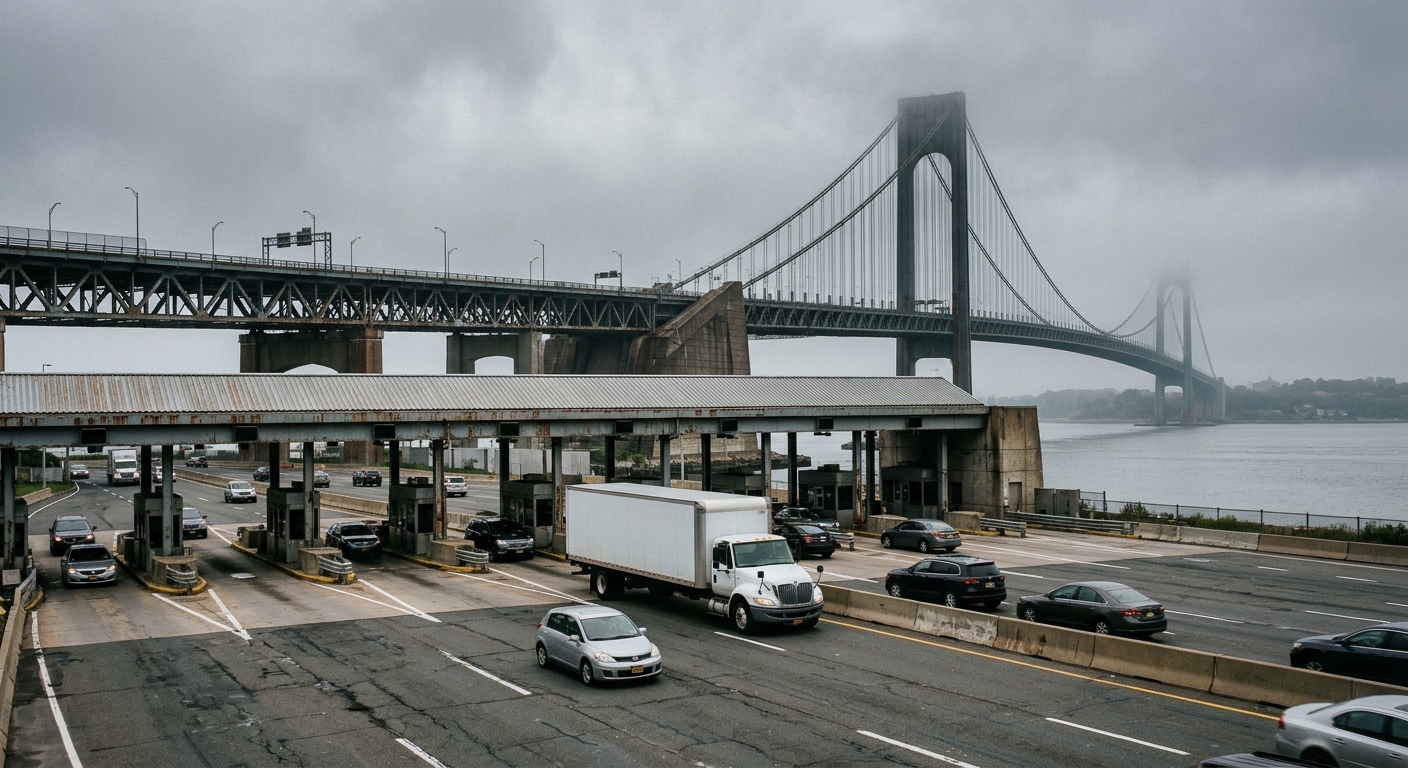
AI-generated illustration; not a photograph of the reported event.
- calendar_today November 17, 2026
New Bridge Toll Increases Coming in 2027
Starting January 1, 2027, drivers in California's San Francisco Bay Area will face higher costs to cross seven major state-owned bridges. The new bridge tolls, implemented by the Bay Area Toll Authority (BATA), are designed to fund essential maintenance and operations as infrastructure ages in the region.
Details of the Upcoming Toll Changes
The affected bridges include the San Francisco-Oakland Bay, Antioch, Benicia-Martinez, Carquinez, Dumbarton, Richmond-San Rafael, and San Mateo-Hayward bridges. The Golden Gate Bridge is not included in these changes.
The new tiered pricing system will charge drivers using a FasTrak toll tag $9 per crossing for a standard two-axle vehicle. Those with a registered license plate account will pay $9.25, while drivers receiving an invoice in the mail will see their toll reach $10 per crossing.
Commercial vehicles and delivery trucks, which often have multiple axles, will also see higher tolls, potentially amplifying costs across local businesses and supply chains. BATA opted for phased-in annual increases through 2030 instead of a single large hike to limit commuter impact.
Reasons Behind the Toll Increase
The Bay Area Toll Authority cited rising infrastructure costs as the primary driver behind the toll increase. "State law requires [us]—working in partnership with Caltrans [California's Department of Transportation]—to keep the state-owned toll bridges structurally sound and in good repair," BATA stated. The bridges span ages from 13 to 90 years, and ongoing bridge maintenance and rehabilitation costs increase as the structures age. BATA affirms that all funds raised will go exclusively to bridge maintenance, repairs, and operations.
Potential Impact Beyond Drivers
While the immediate impact is on commuters and bridge users, the toll hike may extend further. Commercial delivery trucks, facing higher commercial tolls, may pass increased costs along to businesses and consumers. This could lead to higher prices for goods and services at local diners, grocery stores, and other small businesses reliant on Bay Area bridge crossings for deliveries.
Despite the increases, some residents note that toll costs remain lower than those in other metropolitan areas, such as New York and New Jersey, where bridge crossings can cost over $23.
Commuter Reactions and Future Increases
Local response to the new bay area tolls has been mixed, with some commuters sharing frustration online over the rising expense, especially for those who must cross bridges daily. One Reddit user pointed out their lack of alternatives and the accumulating cost, while others expressed hope for lower rates or more efficient spending. Nonetheless, some see the tolls as a necessary measure for essential upkeep, arguing that bridge users should contribute to maintenance expenses.
The scheduled increases will not end in 2027: FasTrak toll rates are set to rise annually, reaching $9.50 in 2028, $10 in 2029, and $10.50 by 2030. License plate and invoice rates will also climb, with invoice payments reaching $11.50 per crossing in 2030.
How Drivers Can Manage Rising Costs
The tiered toll pricing system, originally delayed to 2027, gives drivers a chance to save. Using a FasTrak tag will result in savings of up to $1 per crossing compared to mail-in payments. For regular commuters, enrolling in FasTrak can mitigate overall commuter costs as the toll increases take effect in the coming years.
Conclusion
The bridge toll increases scheduled for 2027 and beyond highlight the region's ongoing struggle to balance aging infrastructure with the financial realities facing drivers, commuters, and consumers. As maintenance needs grow, Bay Area residents and businesses alike will feel the effects both at the toll booths and potentially at the checkout counter.
Source: foxnews.com.