
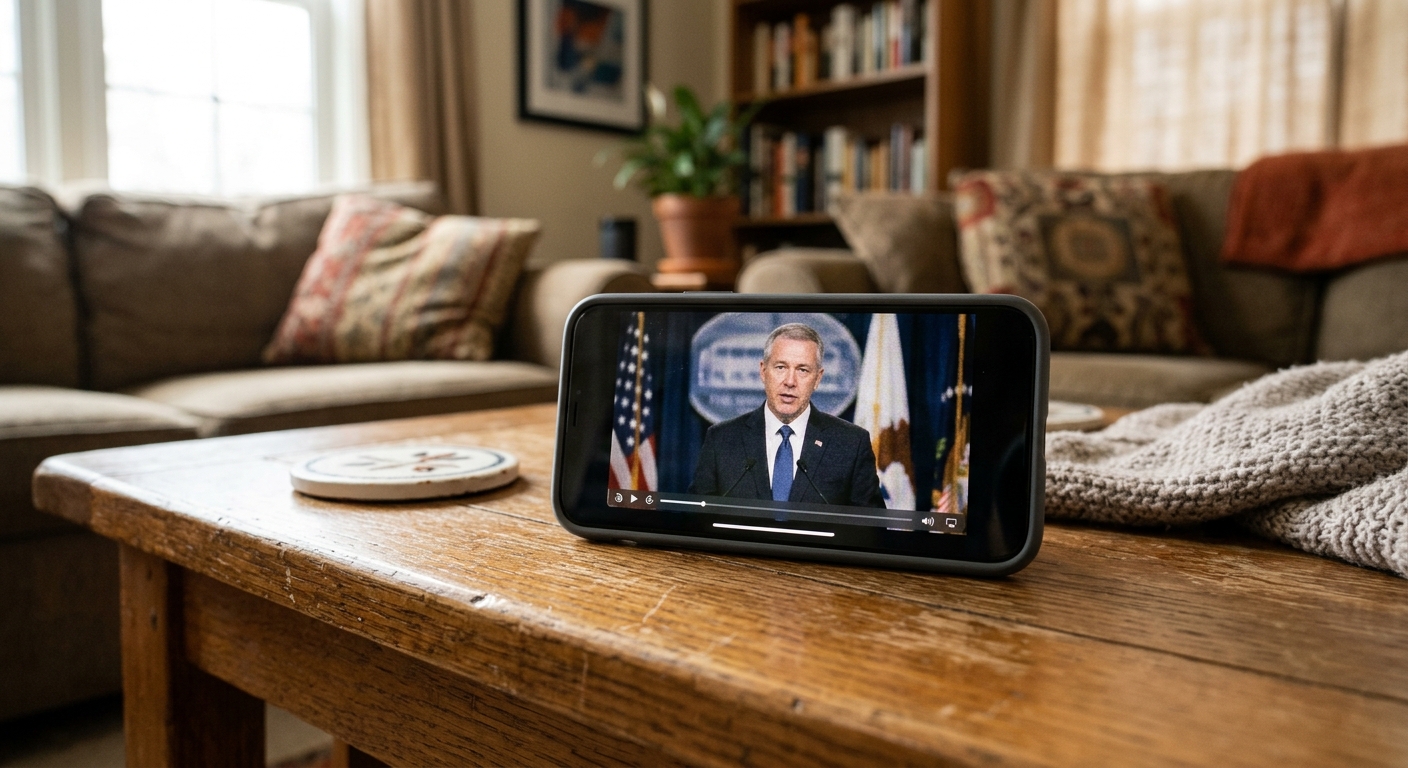
AI-generated illustration; not a photograph of the reported event.
- calendar_today October 29, 2026
The Proliferation of Deepfakes Driven by AI Advances
Recent advances in artificial intelligence have made it increasingly easy to create highly convincing deepfake images, videos, and audio recordings. Security experts are warning that these developments pose significant risks for both consumers and voters, as malicious actors find new ways to deploy hyper-realistic scams and spread disinformation.
Deepfakes Deceive the Public and Undermine Trust
Deepfakes that mimic the voices and likenesses of public figures—including celebrities and political candidates—can mislead the public in a variety of ways. According to Doppel, a social engineering defense platform, less than 10% of people are able to recognize an audio deepfake. Kevin Tian, co-founder of Doppel, noted, "In a test, only 8% of people realized an AI agent was calling them, whereas 92% thought they were speaking to a human."
AI Deepfakes in Political Campaigns and Elections
The ability of AI to produce deepfakes at scale is becoming a critical concern in the political arena. AI-generated advertisements featuring deepfakes of politicians have already appeared online and across social media ahead of the midterm elections. In one notable incident in Texas, an AI-manipulated video falsely accused Senate candidate James Talarico of sexual misconduct—a claim debunked by The Poynter Institute's PolitiFact service. Michael Kaiser, CEO of Defending Digital Campaigns, emphasized that when it becomes difficult to distinguish legitimate content, "you question everything."
The Wesleyan Media Project reports that, as of mid-October, political campaigns had spent over $137 million on at least 220 AI-generated ads, some using deepfakes of candidates. This figure marks a large increase compared to less than $50,000 in spending on AI-generated ads during the 2024 cycle. Erika Franklin Fowler, co-director of the Wesleyan Media Project, observed that in most cases, there is no disclosure that the ads were made using AI. Travis Ridout, also a co-director, added that even suspected deepfakes can shape public opinion, as "even if we know it's not real, that sticks in one's mind."
How Deepfakes Are Created and Used in Scams
Deepfakes are a form of synthetic media that can convincingly replicate the voice or image of a private individual or public figure. They can be used to create fake videos, simulate a familiar voice on a phone call, or impersonate a political figure asking for support or donations. Raul Liive, a deepfake expert at Veriff, noted that the technology required to generate deepfakes has rapidly improved in accessibility and ease-of-use. "Every day that goes by, the generation of deepfake data gets easier and easier," Liive said.
Veriff has documented a 300% increase in deepfake-related fraud attempts against businesses this year compared to 2025. Criminals have targeted individuals with scams such as fake loan requests from supposed friends or urgent pleas for help with medical bills. Liive recommended skeptical consumers verify such requests by contacting the individual through a known, trusted communication channel.
Challenges in Detecting Deepfakes and Eroding Public Confidence
Deepfake detection remains challenging for most consumers. Veriff research showed that 70% of people misidentified a deepfake video of a female character as real. Traditional telltale signs of AI-generated content, like unnatural features, are becoming less apparent as technology improves. Many individuals now rely on unreliable visual cues, which AI is increasingly able to correct.
As the realism of synthetic media increases, public trust in legitimate content is also undermined. Michael Kaiser cited the public's suspicion surrounding an authentic photo of Senator Mitch McConnell following a medical emergency as an example of growing doubt about the authenticity of images shared online. "People don't know if what they are looking at is legitimate, or if requests for donations are real. They're questioning everything that's going on and that disadvantages and erodes trust in the whole system," Kaiser said.
Conclusion
With deepfakes becoming more sophisticated and easier to produce, experts urge consumers and voters to remain vigilant, question unexpected requests, and verify information through trusted channels. As the line between real and artificial content blurs, maintaining public trust presents an ongoing and complex challenge.
Source: cbsnews.com.