
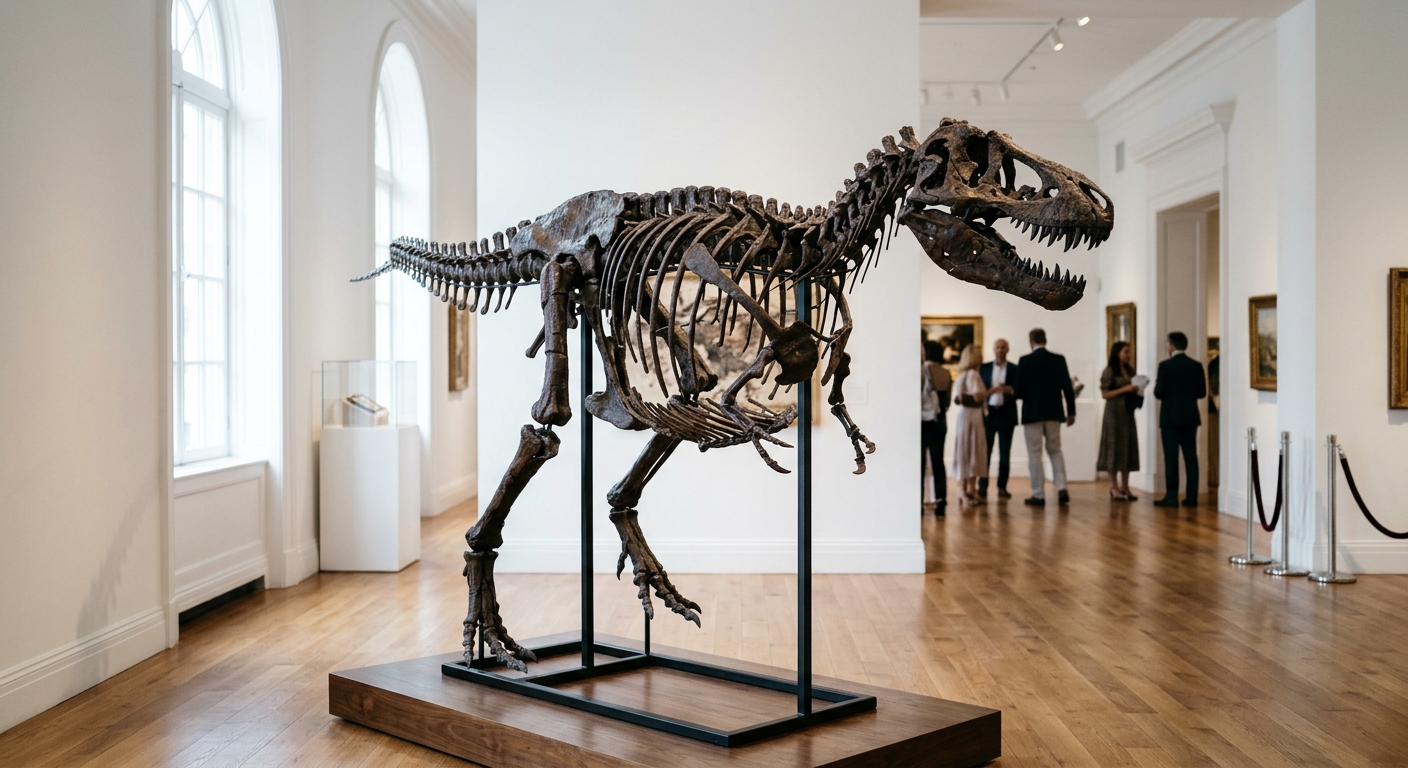
AI-generated illustration; not a photograph of the reported event.
- calendar_today October 27, 2026
Record-Breaking Sale for a Rare Dinosaur Fossil
A rare nanotyrannus fossil made headlines on Tuesday when it sold for $47.3 million at an auction in New York City, according to Sotheby’s. The skeleton, nicknamed "Jodi," now ranks among the world’s most expensive fossil sales. The sale significantly outpaced the auction house’s expectations, which estimated the specimen would fetch between $6 million and $9 million.
Jodi: The Miniature T. rex
"Jodi" is a nanotyrannus skeleton, often referred to as a miniature Trex due to its resemblance to a smaller version of the iconic tyrannosaurus rex. Nanotyrannus, now understood to be a cousin rather than a juvenile T. rex, roamed the Earth approximately 67 million years ago during the Cretaceous period. Standing at 6.5 feet tall and stretching nearly 20 feet long, the specimen is considered almost 70% complete.
Details of the Auction
The dinosaur auction at Sotheby’s drew strong interest, with six prospective buyers placing competing bids during the approximately 12-minute live sale conducted online and by phone. The winning bidder, who has chosen to remain anonymous, outbid the competition to secure the rights to own this rare dinosaur fossil.
"Jodi" is now the second-priciest set of dinosaur bones ever sold. Earlier this year, a T. rex fossil named “Gus” claimed the top spot, selling at Sotheby’s for $50.1 million.
From Discovery to Auction Block
The jodi nanotyrannus skeleton was discovered in 2019 on the Montana ranch of Jodi Pierson, whom the fossil is named after. It is only the third known example of Nanotyrannus in existence. Since early October, the specimen has been on display at Sotheby’s headquarters in upper Manhattan, attracting attention from collectors, scientists, and dinosaur enthusiasts.
The story of "Jodi"'s excavation was documented on the Discovery Channel series “Dino Hunters” in 2020, which showcased the efforts of professional fossil hunters in unearthing and preserving the specimen.
Scientific Significance of Nanotyrannus
For decades, scientists debated whether Nanotyrannus was simply a young T. rex or a distinct genus. However, research published in the previous year concluded that Nanotyrannus is indeed separate from Tyrannosaurus rex. The species is notable for its relatively longer forelimbs, larger claws, and more slender, blade-like teeth compared with the T. rex, while being roughly half its length.
Debate Over Private Fossil Ownership
The sale of high-profile fossils like "Jodi" has sparked discussion within the scientific community. Some paleontologists argue that unique finds such as this creataceous dinosaur should enter museum collections for public viewing and further study, instead of private ownership. Sotheby’s, for its part, acknowledged the work of the excavation team and highlighted the scientific value that such discoveries can hold, regardless of their final ownership.
Source: abcnews.com.